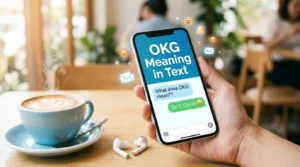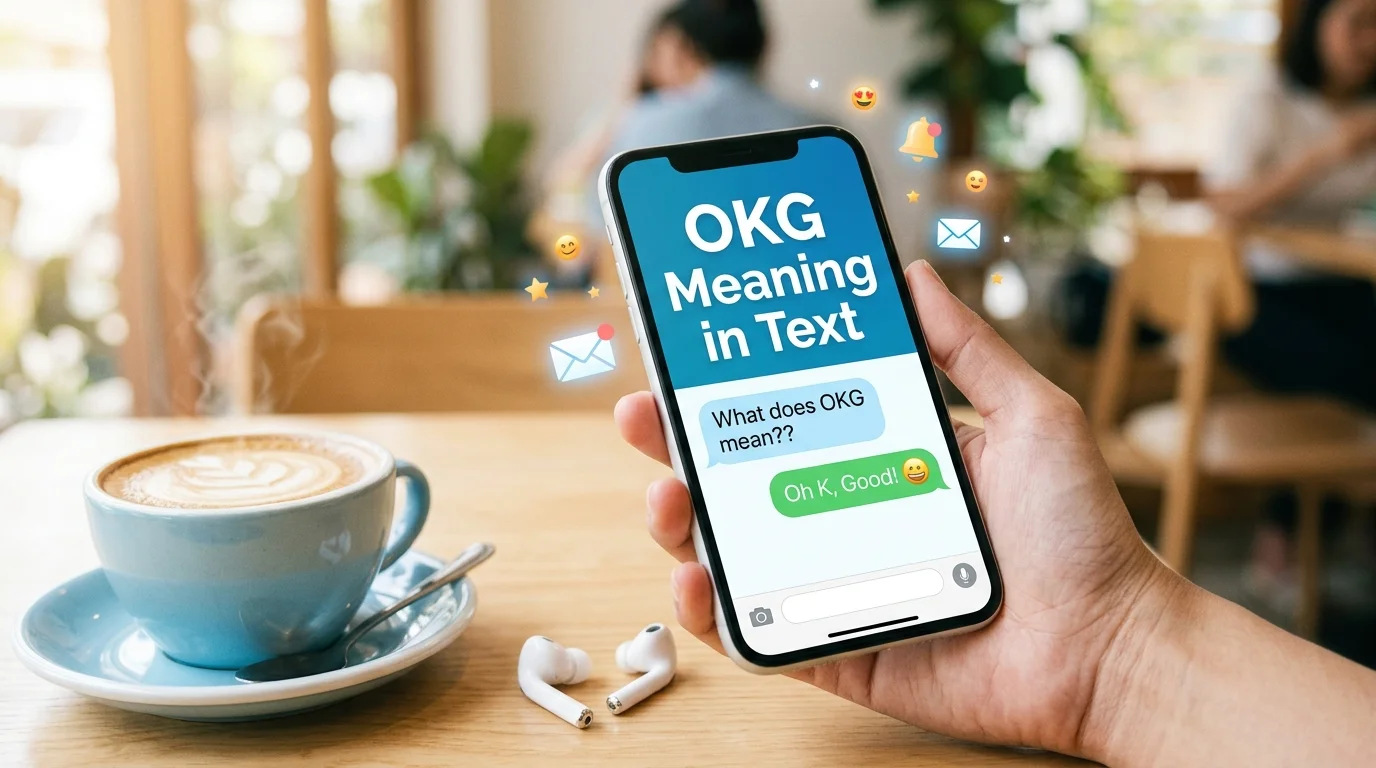
You send a message asking someone to do something, or maybe you’re just casually chatting, and they reply with “okg.” No punctuation, no explanation, just those three letters sitting there.
If you paused for a second wondering what exactly that meant, you’re definitely not alone. It looks like it should be obvious, almost like a typo of “ok,” but there’s clearly something more going on with that extra letter tacked onto the end.
“OKG” is one of those smaller, more casual texting abbreviations that doesn’t get as much attention as heavy-hitters like “lol” or “omg,” but it still shows up pretty often in everyday conversations, especially among younger texters and on social media. Because it’s short and a little unusual-looking, it can definitely cause a moment of confusion the first time you come across it.
What Does “OKG” Mean in Texting?

In most casual texting conversations, “OKG” stands for “Okay G.” It’s essentially a quick, casual way of agreeing to something while addressing the other person as “G,” a slang term commonly used to mean “friend,” “bro,” or “homie.” Think of it as a more personalized, casual version of just saying “ok.”
The OKG meaning in text, in this sense, works a lot like saying “okay, bro” or “sounds good, my guy,” just condensed into a single, faster-to-type word. For example, if someone texts “meet me outside in 5,” a reply of “okg” basically means “okay, got it” with a slightly more familiar, friendly tone attached.
The term “G” itself has deep roots in hip-hop and urban slang, historically short for “gangster,” but over time it evolved into a much more casual, friendly term of address, similar to how people use “bro,” “dude,” or “fam.” So when someone types “okg,” they’re not just agreeing they’re agreeing in a way that feels a little warmer or more familiar than a plain “ok” would.
That said, “okg” isn’t as universally standardized as more common abbreviations like “ok” or “kk,” so context and the relationship between the people texting still play a role in how it comes across.
Full Form / Expansion of “OKG”
The most common full form of “OKG” breaks down as:
OK = Okay
G = “G” (slang term for friend, similar to “bro” or “homie”)
Put together, it reads as “okay, G” a casual, friendly way of confirming or agreeing to something while addressing the other person familiarly.
Unlike an abbreviation that stands for an entirely different phrase, “okg” is really just a slightly stylized version of “ok” with a term of address folded directly into it. This is part of why it feels so natural to type quickly, even though it might look a little unfamiliar the first time you see it written out.
Where “OKG” is Commonly Used
“OKG” shows up mostly in casual, informal spaces, particularly among younger texters and in communities where slang terms like “G” are already common.
Texting and Messaging Apps
In everyday texting, “okg” is most often used as a quick, casual reply to confirm plans or agree to something, especially between close friends. For example: “pulling up in 10” → “okg.”
Social Media DMs
On Instagram or Snapchat, “okg” frequently appears in direct messages, especially in casual back-and-forth conversations between friends or people who already use similar slang with each other.
Group Chats
Within group chats, “okg” is a common, low-effort way to confirm plans or agree with something someone else said, especially in fast-moving conversations where people are typing quickly.
Gaming Chats
In gaming spaces, “okg” occasionally shows up as a quick way to confirm a strategy or acknowledge a teammate’s instructions, similar to how “kk” or “aight” might be used.
Comment Sections
Under posts, especially in casual or hip-hop-adjacent online spaces, “okg” sometimes appears as a quick, affirming comment reacting to something someone shared.
Forums and Online Communities
On forums where casual slang is common, “okg” might appear as a quick way of agreeing with a point someone made in a discussion thread.
Across these spaces, the OKG meaning in text stays fairly consistent it’s a casual, friendly form of agreement, just with a bit more personality than a plain “ok.”
Origin & History of “OKG” as a Texting Abbreviation
The roots of “okg” really trace back to two separate threads coming together: the abbreviation “ok” itself, and the slang term “G.”
“OK” has one of the most interesting and debated origins in the English language, with theories tracing it back to the 1830s as a playful misspelling abbreviation (“oll korrect”) that eventually became one of the most universally recognized words in the world. By the time texting culture developed, “ok” was already deeply embedded in everyday communication, making it a natural building block for further abbreviation.
The term “G,” meanwhile, has strong roots in hip-hop culture beginning in the 1980s and 1990s, originally short for “gangster” within certain communities, but gradually evolving into a much broader, friendlier slang term for “friend” or “homie” as hip-hop culture influenced mainstream youth slang more broadly. By the 2000s and 2010s, “G” had become a common, casual term of address used widely across different groups, not just within its original context.
As texting culture continued blending everyday abbreviations with popular slang terms, combinations like “okg” started appearing naturally, especially among younger texters who were already comfortable using “G” as a casual way to address friends. Rather than typing “ok G” as two separate words, condensing it into “okg” fit perfectly into the broader texting trend of merging words together for faster typing.
Other Possible Meanings of “OKG”
While “okay, G” is the most common interpretation, “okg” can occasionally carry other meanings depending on context.
OK Google
In some tech-related conversations, particularly around voice assistants, “OKG” is sometimes used informally as shorthand for “OK Google,” the wake phrase used to activate Google’s voice assistant. This is far less common in casual texting but occasionally shows up in discussions about smart devices or tech features.
Okay, Great
In some casual texting contexts, especially among people less familiar with “G” as slang, “okg” might simply be read as a condensed version of “okay, great,” expressing enthusiasm or approval rather than addressing someone specifically.
Initials or Group-Specific Term
As with many shorter, less standardized abbreviations, “OKG” could occasionally represent someone’s initials, a username, or a term with meaning specific to a particular friend group or online community.
As always, context plays a big role here. In most casual texting between friends, “okay, G” is by far the most likely meaning, especially if the sender frequently uses similar slang like “bro,” “fam,” or “homie” elsewhere in conversation.
How to Use “OKG” Correctly
If you want to use “okg” naturally in your own texting, here are a few tips to help it feel genuine rather than forced.
Use it with people you’re comfortable with. Since “okg” carries a casual, familiar tone by addressing someone as “G,” it works best between friends rather than in more formal or distant relationships.
Use it to confirm plans quickly. “okg” works great as a fast reply to logistics-related texts, like confirming a time, location, or plan.
Keep the tone light. “Okg” fits naturally into relaxed, friendly conversations rather than serious or emotionally heavy topics.
Pair it with other casual slang when relevant. Since “G” is already part of a broader casual vocabulary, “okg” blends naturally with other slang like “bet,” “fr,” or “no cap.”
Avoid using it with people unfamiliar with the term. If you’re texting someone who doesn’t typically use or understand “G” as slang, a plain “ok” might come across more clearly.
Example Conversations/Chat Snippets Using “OKG”
Here are several real-style examples showing how “okg” gets used across different platforms and situations.
Example 1 Confirming Plans
Sam: pulling up in 10, be ready
Jordan: okg, I’ll be outside
Example 2 Casual Agreement
Maya: let’s just grab food instead of cooking tonight
Zoe: okg, sounds good to me
3 Group Chat Logistics
Liam: meeting at the usual spot at 7
Noah: okg see you then
Example 4 Gaming Chat
Player1: fall back and regroup near mid
Player2: okg, on it
Example 5 Snapchat Reply
“okg, sending the location now”
6 Quick Confirmation
Aisha: I’ll text you when I’m outside
Zayn: okg, no rush
Example 7 Instagram DM
“okg bet, let’s link up this weekend”
Example 8 Casual Check-In
Sam: gonna head out a little early today
Jordan: okg, drive safe
9 Agreeing to a Plan Change
Maya: actually let’s push it back an hour
Zoe: okg, works better for me anyway
10 Friend Group Text
“okg fam, see everyone tonight”
These examples show how naturally “okg” fits into fast, casual conversations, especially when confirming plans or agreeing to something among friends.
When NOT to Use “OKG”
While “okg” works well in casual settings, there are definitely situations where it’s better to avoid it.
Professional emails or workplace messages. Using “okg” in a work email would likely confuse coworkers or come across as unprofessional.
Formal writing or academic work. Texting abbreviations like “okg” have no place in essays, reports, or official documents.
Conversations with people unfamiliar with slang like “G.” If you’re texting someone older or less familiar with casual slang, “okg” might come across as confusing rather than friendly.
Serious or emotionally heavy conversations. Since “okg” carries a light, casual tone, it doesn’t fit well in deeper conversations that call for a more thoughtful or sincere response.
Similar Texting Abbreviations and How “OKG” is Different from Them
There are a few other casual agreement abbreviations that sometimes get compared to “okg,” so here’s a quick breakdown of the differences.
OKG vs. KK “KK” is simply a doubled-up version of “ok,” used purely for casual agreement, while “okg” adds a familiar term of address on top of that same basic confirmation.
OKG vs. Bet “Bet” is used to confirm agreement or acknowledge a plan, often carrying a slightly more enthusiastic tone, while “okg” is a bit more neutral and straightforward.
vs. Aight “Aight” (a casual version of “alright”) serves a similar purpose to “okg,” expressing agreement, though it doesn’t include the same term-of-address element.
OKG vs. Okay Google In tech contexts, “OK Google” is a functional voice command, completely unrelated to the casual texting meaning of “okg.”
OKG vs. Plain OK “Ok” is neutral and works in basically any context, while “okg” carries a more personal, familiar tone specifically meant for casual relationships.
How to Respond When Someone Sends You “OKG”
Responding to “okg” is usually pretty simple, since it’s just a casual confirmation. Here are a few natural ways to reply depending on context.
If it’s confirming plans, you might simply continue the conversation naturally: “cool, see you soon!”
If you want to match the casual tone, replying with similar slang works well: “okg bet.”
It feels like a quick acknowledgment, a simple thumbs-up emoji or “sounds good” fits perfectly.
If you’re unsure whether they meant something else, it’s completely fine to ask: “okg? like okay?”
Common Mistakes/Misunderstandings Around “OKG”
Mistaking it for a typo. Since “okg” looks similar to “ok” with an extra letter, some people might initially assume it’s simply a typing mistake rather than intentional slang.
Assuming everyone understands “G” as slang. Not everyone is familiar with “G” as a casual term of address, so using “okg” with someone unfamiliar with that context might cause confusion.
Using it in overly formal situations. Since “okg” carries a casual, familiar tone, using it in professional or serious conversations can feel out of place.
Overanalyzing a simple confirmation. Sometimes “okg” really is just a quick, casual way of saying “ok” it doesn’t always carry deeper meaning beyond confirming plans or agreement.
FAQs
1. What does OKG mean in a text message?
OKG most commonly means “okay, G,” a casual way of agreeing to something while addressing the other person familiarly, similar to saying “okay, bro.”
2. Is OKG the same as just saying OK?
It’s similar in meaning, but OKG adds a more personal, familiar tone by including “G” as a casual term of address.
3. What does the “G” in OKG stand for?
“G” is slang originally rooted in hip-hop culture, historically short for “gangster,” but now commonly used more broadly to mean “friend” or “homie.”
4. Can OKG mean something other than “okay, G”?
Yes, in some tech-related contexts, it can informally reference “OK Google,” though this is far less common than the casual texting meaning.
5. Is it okay to use OKG in professional conversations?
No, OKG is casual slang and should be avoided in professional emails, academic writing, or formal business communication.
6. How should I respond if someone sends me OKG?
A simple, casual reply like “sounds good!” or matching their tone with similar slang works naturally.
Conclusion
At its core, the OKG meaning in text comes down to a simple, friendly confirmation: “okay, G.” It’s a casual way of agreeing to something while addressing the other person familiarly, blending the universally recognized “ok” with the widely used slang term “G.”
Now that you understand the full OKG meaning in text from its origins in hip-hop slang to its everyday texting use, along with when to use it and how to respond you can recognize it confidently wherever it shows up and even start using it naturally in your own casual conversations.

Hi, I’m Henry Walker, a language enthusiast and content writer at Meanzafy.com. I enjoy exploring the meanings behind words, slang, abbreviations, text messages, and everyday expressions to make English easier for everyone. My goal is to create clear, accurate, and easy-to-read guides that help readers quickly understand confusing terms and use them with confidence. Whether you’re looking for the meaning of a text abbreviation or the explanation of a common phrase, I’m here to provide reliable, beginner-friendly content you can trust.