You wake up, check your phone, and see a text that just says “gma!” from a friend, or maybe you spot it in a group chat first thing in the morning. If you paused for a second trying to figure out exactly what that meant, you’re definitely not alone. “GMA” is one of those short, punchy abbreviations that shows up a lot in morning texts, social media captions, and casual conversations, and while it might seem obvious once you know it, it can feel a little confusing the first time you see it.
Like a lot of shorter abbreviations, “GMA” isn’t locked into just one single meaning. Depending on the context, the platform, or even the country you’re texting from, it can stand for a few different things. The good news is that once you understand the most common interpretations, spotting the GMA meaning in text becomes pretty easy.
In this guide, we’ll walk through everything you need to know: the most common definition, where it shows up most often, how it likely developed, other possible meanings depending on context, and how to use or respond to it naturally. By the end, you’ll have a full grasp of the GMA meaning in text and feel confident using it yourself.
What Does “GMA” Mean in Texting?
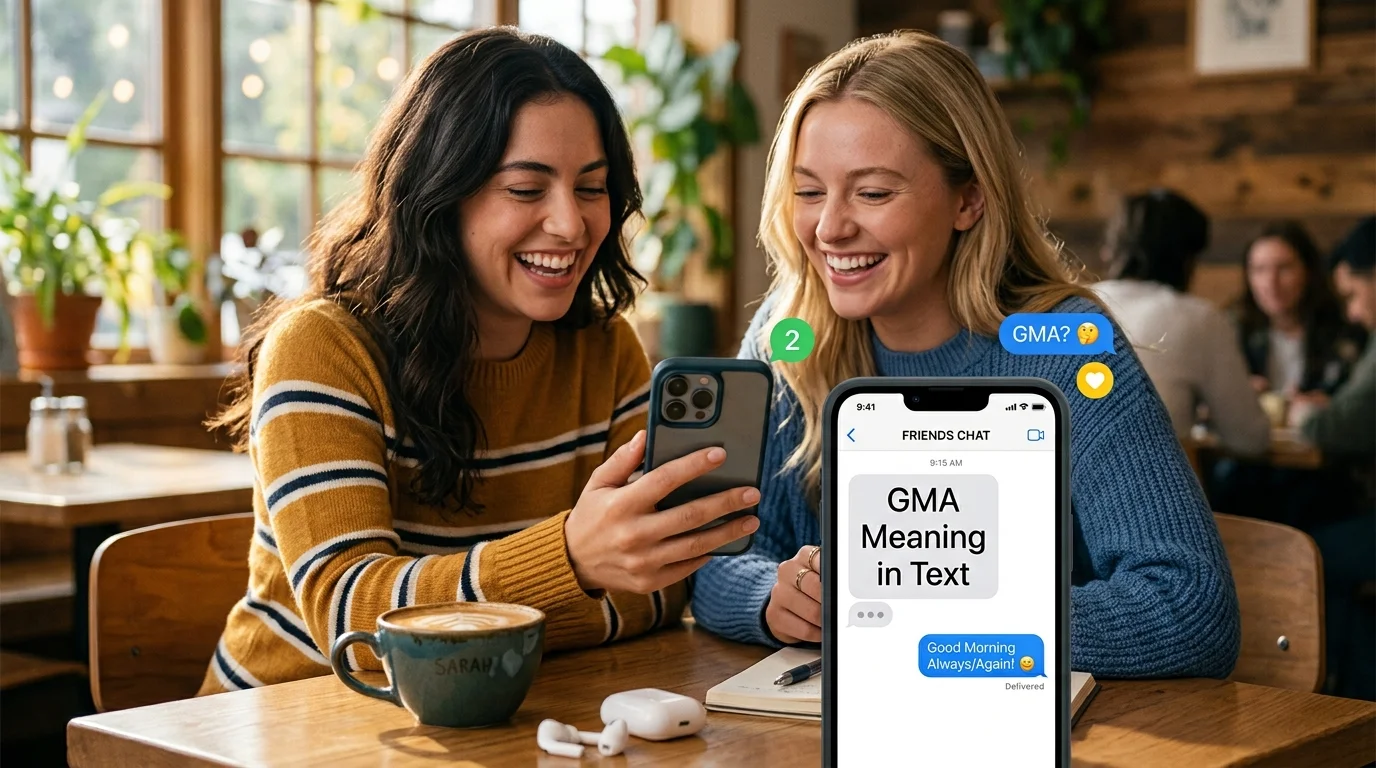
In most casual texting and social media conversations, “GMA” stands for “Good Morning All” (or sometimes “Good Morning America,” depending on context). It’s typically used as a quick, friendly greeting to kick off the day, especially in group chats or social media posts where someone wants to say good morning to multiple people at once.
The GMA meaning in text, when used casually, works a lot like typing “good morning everyone” but in a shorter, faster format. It’s common to see it as the opening message in a group chat, or as a caption on a morning-themed social media post. For example: “gma! hope everyone has a great day.”
That said, “GMA” is also very widely recognized as the abbreviation for Good Morning America, the long-running American television morning news program. Depending on the conversation, especially if it’s about TV, news, or celebrity interviews, this meaning is often just as likely, if not more likely, than the casual greeting version.
Because of this overlap, understanding the GMA meaning in text really comes down to paying attention to the surrounding conversation and figuring out whether someone’s greeting a group or talking about the TV show.
Full Form / Expansion of “GMA”
Depending on which meaning applies, “GMA” expands differently:
“Good Morning All”
G = Good
M = Morning
A = All
“Good Morning America”
G = Good
M = Morning
A = America
Both expansions share the same first two words, which is exactly why context matters so much here. A quick, casual greeting fits “good morning all,” while a reference to news, TV segments, or celebrity appearances almost always points to “Good Morning America.”
Where “GMA” is Commonly Used
“GMA” shows up across a range of digital spaces, and its meaning tends to shift depending on where exactly you see it.
Texting and Messaging Apps
In personal texting, especially group chats, “gma” is often used as a cheerful way to greet everyone at once first thing in the morning. For example: “gma guys! who’s up for breakfast?”
Social Media Captions and Comments
On Instagram or Facebook, “gma” frequently appears in morning-themed captions, especially under sunrise photos, coffee pictures, or motivational posts.
Group Chats
Group chats are probably the most common place you’ll see “gma” used casually, since it’s a quick way to greet multiple people without typing out a longer message.
Television and Entertainment Discussions
When people are talking about morning news, celebrity interviews, or televised segments, “GMA” almost always refers to Good Morning America, especially in conversations about specific hosts, guests, or news topics covered on the show.
Twitter/X Conversations
On Twitter, “GMA” is frequently used when discussing the show itself, especially around trending topics, celebrity appearances, or breaking news segments featured on the program.
Forums and Fan Communities
In entertainment or news-related forums, “GMA” is a common shorthand reference to the television program rather than the casual greeting.
Comment Sections
Under morning-themed posts or videos, “gma” sometimes appears as a lighthearted greeting, similar to how people comment “good morning” under sunrise photos or coffee content.
Across these spaces, the GMA meaning in text really depends on whether the conversation is casual and personal or related to television, news, or entertainment.
Origin & History of “GMA” as a Texting Abbreviation
The history behind “GMA” actually splits into two fairly separate paths, depending on which meaning you’re looking at.
Good Morning America, the television program, has been around since 1975, making it one of the longest-running morning news shows in the United States. Because of its long-standing popularity and widespread recognition, “GMA” became a natural shorthand reference for the show decades before texting culture even existed. As social media grew, especially platforms like Twitter, fans and viewers continued using “GMA” to reference the show quickly in posts, comments, and discussions.
On the other hand, “gma” as a casual greeting for “good morning all” developed more organically through everyday texting habits. As group texting and messaging apps became more common through the 2000s and 2010s, people needed quick, casual ways to greet multiple people at once without typing out a full message every time. Shortening “good morning all” into “gma” fit naturally into this trend, especially as texting culture increasingly favored speed and brevity.
Because these two meanings come from very different origins one rooted in decades of television history, the other in everyday texting shorthand the GMA meaning in text today really depends on the specific context it appears in.
Other Possible Meanings of “GMA”
Beyond “good morning all” and “Good Morning America,” there are a few other interpretations worth knowing about, depending on context.
Grandma
In some casual or affectionate texting contexts, especially within families, “gma” is sometimes used as an informal shorthand for grandma. For example: “going to visit gma this weekend.”
General Motors Acceptance (Business/Finance Context)
In older financial or business discussions, “GMA” has occasionally been used as an abbreviation tied to specific corporate or financial terms, though this usage is far less common in everyday casual texting.
Graduate Management Admission (Academic Context)
In some academic or admissions-related discussions, “GMA” might occasionally appear as shorthand related to graduate program admissions, though this is a more niche and less frequent interpretation.
Group-Specific or Personal Meaning
As with many short abbreviations, “GMA” could occasionally function as an inside term, nickname, or initials specific to a particular friend group or individual, separate from any of the more common meanings.
As always, context is the deciding factor. If it’s early morning and someone’s greeting a group chat, “good morning all” is the obvious choice. If the conversation involves TV, news, or celebrity interviews, Good Morning America is almost certainly what’s meant. And if it shows up in a family conversation, grandma might be the intended meaning entirely.
How to Use “GMA” Correctly
If you want to use “gma” naturally in your own texting, here are a few tips to help it feel genuine rather than forced.
Use it as a group greeting. “gma” works best when addressing multiple people at once, like starting off a group chat message in the morning.
Add a follow-up for warmth. A standalone “gma” can feel a little abrupt, so pairing it with something extra, like “gma! hope everyone sleeps well tonight… I mean has a great day lol,” adds a friendlier tone.
Be clear about context when discussing the TV show. If you’re referencing Good Morning America specifically, make sure the surrounding conversation makes that clear, especially if you’re talking to someone who might not immediately connect the dots.
Keep it casual. Like most texting abbreviations, “gma” fits best in relaxed, informal settings rather than professional or formal messages.
Avoid confusing it with grandma without context. If you’re referring to your grandmother, it might help to clarify slightly, since “gma” alone could easily be misread depending on the conversation.
Example Conversations/Chat Snippets Using “GMA”
Here are several real-style examples showing how “gma” gets used across different meanings and platforms.
Example 1 — Group Chat Greeting
“gma everyone! ready for the weekend?”
Example 2 — Casual Morning Text
Maya: gma! did you sleep okay?
Zoe: gma! yeah, finally caught up on sleep lol
Example 3 — Instagram Caption
“gma ☀️ coffee in hand, ready for the day”
Example 4 — TV Show Reference
Liam: did you catch the interview on GMA this morning?
Noah: yeah, it was actually really good
5 — Twitter Conversation
“can’t believe that segment on GMA today, wild interview”
6 — Family Text
Sam: visiting gma this weekend, so excited
Jordan: tell her I said hi!
7 — Group Chat Morning Update
“gma guys, running a bit late today, be there soon”
8 — Comment Under a Sunrise Photo
“gma, this view is stunning”
9 — Discussing a Celebrity Appearance
“saw her interview on GMA, she seemed really genuine”
10 — Casual Friend Text
Aisha: gma!! big day ahead, wish me luck
Zayn: gma, you’ve got this!
These examples show how flexible “gma” can be the same three letters shift meaning completely depending on whether it’s a casual greeting, a reference to the TV show, or something more personal like family.
When NOT to Use “GMA”
While “gma” fits well into casual settings, there are definitely situations where it’s better to avoid it.
Professional emails or workplace messages. Typing “gma” in a work email would likely confuse coworkers or come across as unprofessional.
Formal writing or academic work. Texting abbreviations like “gma” have no place in essays, reports, or official documents.
Conversations where the meaning could be unclear. Since “gma” can mean different things, using it without enough context might confuse the person you’re talking to, especially if they’re unfamiliar with one of its meanings.
Late in the day. Using “gma” (good morning all) well past morning hours can come across as a bit odd or out of place, since the greeting is time-specific.
Similar Texting Abbreviations and How “GMA” is Different from Them
Here’s how “gma” compares to a few other abbreviations people sometimes mix up.
GMA vs. GM — “GM” simply means “good morning” and is used for one person, while “gma” (good morning all) is specifically meant for greeting a group.
GMA vs. GN — “GN” means “good night,” used at the opposite end of the day, while “gma” is exclusively a morning greeting.
vs. TGIF — “TGIF” (thank god it’s Friday) is tied to a specific day of the week, while “gma” is a daily morning greeting regardless of what day it is.
GMA vs. HAGS — “HAGS” (have a great summer) is seasonal and occasion-specific, while “gma” is a simple, everyday morning greeting.
vs. Good Morning America (Full Name) — When written out fully, there’s no ambiguity, but the abbreviated “GMA” requires context to distinguish it from the casual greeting.
How to Respond When Someone Sends You “GMA”
Responding to “gma” is usually pretty simple, but it helps to consider which meaning applies first.
If it’s a casual group greeting, responding with your own “gma!” or “morning everyone!” works perfectly.
If someone’s asking about your day after saying “gma,” a natural response might be: “gma! feeling good today, how about you?”
If the conversation is about the TV show, engaging with the actual topic works best, like “yeah I saw that GMA segment too, it was really interesting.”
If it’s in a family context referring to grandma, responding naturally within that context makes sense, such as “aww tell gma I love her!”
Common Mistakes/Misunderstandings Around “GMA”
Assuming it always means Good Morning America. While that’s a very real and common meaning, especially in entertainment or news conversations, “gma” more often functions as a casual “good morning all” greeting in everyday texting.
Using it outside of morning hours. Since “gma” is time-specific as a greeting, using it later in the day can feel a little mismatched or confusing.
Confusing it with grandma without context. In family-related texts, it’s worth being clear about which meaning you intend, since “gma” alone could be read multiple ways.
Assuming everyone understands it the same way. Not everyone associates “gma” with the same meaning, so a little context goes a long way in avoiding mix-ups.
FAQs
1. What does GMA mean in a text message?
GMA most commonly means “good morning all,” used as a casual greeting for a group, though it can also refer to the TV show Good Morning America.
2. Is GMA only used for texting greetings?
No, it’s also very commonly used to reference Good Morning America, especially in conversations about news, TV segments, or celebrity interviews.
3. Can GMA mean grandma?
Yes, in some casual or family texting contexts, “gma” is occasionally used as informal shorthand for grandma.
4. How can I tell which meaning of GMA someone intends?
Context is key — casual group texts usually mean “good morning all,” while conversations about TV, news, or celebrities usually point to Good Morning America.
5. Is it okay to use GMA in professional settings?
No, GMA as a casual greeting should be avoided in professional emails or formal communication.
6. What’s the difference between GMA and GM in texting?
GM means “good morning” for one person, while GMA (good morning all) is specifically meant for greeting a group of people at once.
Conclusion
The GMA meaning in text really depends on context, splitting mainly between two common interpretations: a casual “good morning all” greeting used in group chats and social media, or a reference to the long-running television program Good Morning America. Less commonly, it can also refer to grandma in casual family conversations.
Now that you understand the full range of the GMA meaning in text including its most common uses, its origin, other possible interpretations, and how to respond naturally you’ll be able to quickly figure out exactly what someone means the next time “gma” shows up in your messages.

Hi, I’m Grace Mitchell, a language enthusiast and content writer at Meanzafy.com. I love exploring the meanings behind words, text abbreviations, internet slang, acronyms, and everyday expressions. My goal is to make language simple, interesting, and easy to understand for everyone. Through clear, well-researched, and beginner-friendly articles, I help readers quickly find accurate answers and learn something new every day. Thanks for stopping by—I’m excited to be part of your learning journey!