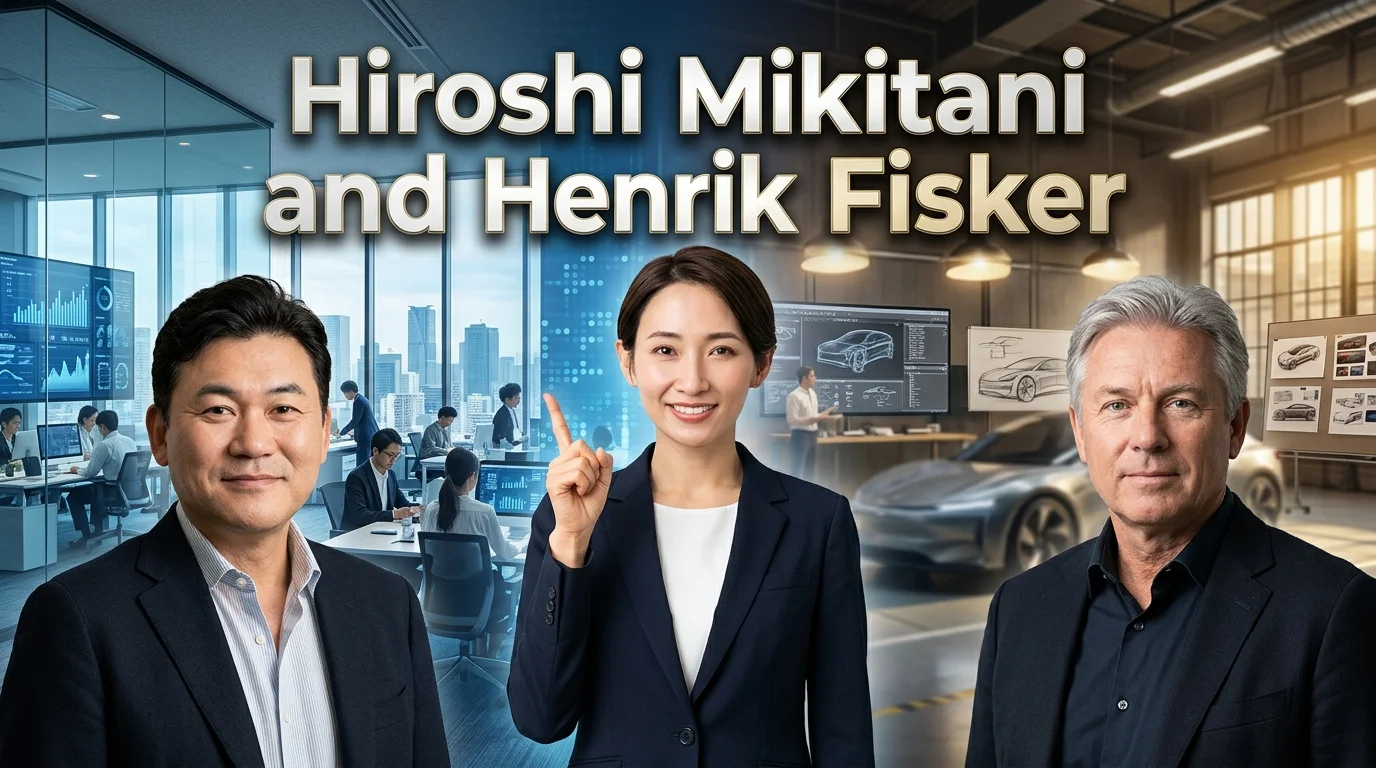
The business world is shaped by individuals who recognize opportunities, challenge traditional industries, and introduce new ideas. Some entrepreneurs transform how people shop, communicate, and manage their finances, while others focus on changing transportation through innovative designs and advanced technology. Hiroshi Mikitani and Henrik Fisker represent two different approaches to innovation, business leadership, and entrepreneurship.
Hiroshi Mikitani is a Japanese entrepreneur best known for founding Rakuten, one of Japan’s major technology and e-commerce companies. His professional journey demonstrates how an online marketplace can develop into an international business ecosystem offering shopping, financial services, telecommunications, and digital entertainment. His leadership has helped Rakuten become an important participant in Japan’s digital economy.
Henrik Fisker is a Danish-born automotive designer and entrepreneur recognized for his work with BMW, Aston Martin, and independent electric vehicle companies. His automotive design philosophy combines attractive styling, modern technology, and an interest in environmentally conscious transportation. Through companies such as Fisker Automotive and Fisker Inc., he attempted to introduce distinctive vehicles into the competitive automobile market.
Although Hiroshi Mikitani and Henrik Fisker have different professional backgrounds, their careers provide interesting examples of how entrepreneurs identify opportunities and develop business ideas. Mikitani concentrated on digital commerce and technology, whereas Fisker focused on automotive design and electric mobility.
There is no established public evidence of a direct business partnership between them. Their connection is primarily an interesting comparison of two independent entrepreneurs who pursued innovation in different industries.
This article explores the Hiroshi Mikitani biography, Henrik Fisker biography, educational backgrounds, career timelines, business achievements, leadership styles, financial challenges, and professional legacies. It also examines the important lessons their entrepreneurial journeys offer to people interested in business and innovation.
Who Is Hiroshi Mikitani?
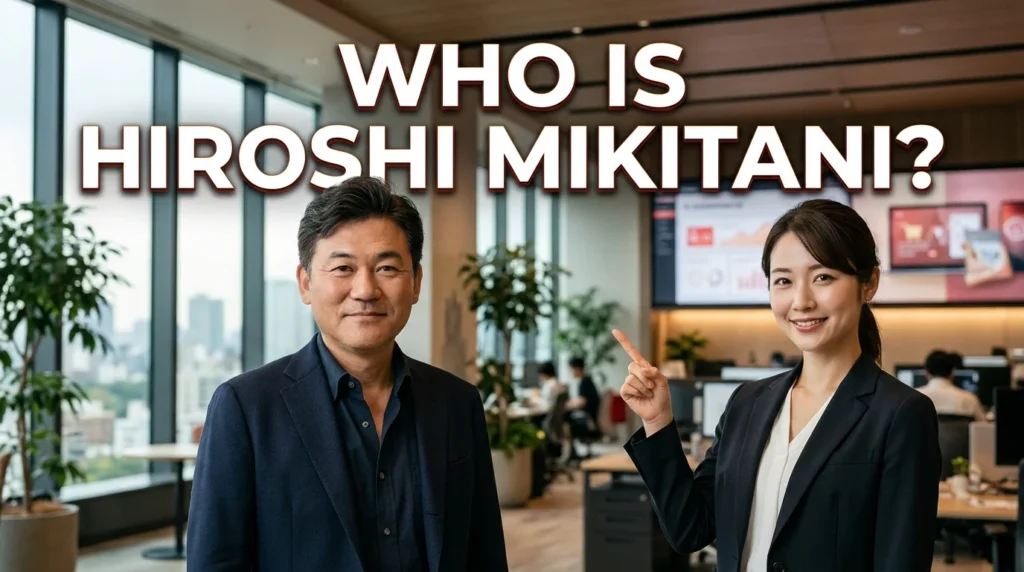
Hiroshi Mikitani is a Japanese businessman, entrepreneur, and corporate executive best known as the founder and chairman of Rakuten Group. Born on March 11, 1965, in Kobe, Japan, he developed an interest in business and economics that eventually influenced his decision to establish an independent company.
Mikitani initially followed a traditional professional career. He attended Hitotsubashi University, where he studied economics and developed an understanding of business and financial systems.
After completing his education, he joined the Industrial Bank of Japan in April 1988. Working in the banking industry provided valuable experience in corporate finance, financial markets, and business management.
However, his professional ambitions eventually moved beyond traditional banking.
Mikitani later attended Harvard Business School in the United States and received his MBA in 1993. This experience exposed him to international business ideas and encouraged him to consider entrepreneurship as a long-term career.
In 1996, he established Crimson Group. In 1997, he founded Rakuten, originally focusing on online shopping and helping independent merchants reach customers through the internet.
At the time, e-commerce was still developing in Japan. Mikitani recognized that the internet could create opportunities for businesses that lacked the resources to establish large retail operations.
His idea gradually developed into a major technology business.
Today, Rakuten operates across e-commerce, financial technology, digital content, communications, and other industries. Mikitani’s journey is an important example of how a relatively focused business idea can grow into a diversified organization.
Who Is Henrik Fisker?
Henrik Fisker is a Danish-born automotive designer and entrepreneur known for his contributions to luxury vehicle design and electric transportation.
Born on August 10, 1963, in Denmark, Fisker developed an interest in automobiles at a young age. His fascination with vehicle styling encouraged him to pursue professional education in automotive design.
He attended the ArtCenter College of Design in California, graduating with a degree in automotive design.
After completing his education, Fisker entered the professional automotive industry. He worked with BMW in Germany before moving into important design positions at Aston Martin and Ford.
His professional experience included involvement in the development of recognizable vehicles such as the BMW Z8, Aston Martin DB9, and Aston Martin V8 Vantage.
These projects helped establish his reputation as a designer capable of combining luxury, performance, and distinctive styling.
However, Fisker wanted to do more than design vehicles for established manufacturers. He wanted to create independent automotive businesses that could introduce products based on his own creative vision.
In 2007, he co-founded Fisker Automotive, which developed the luxury plug-in hybrid Fisker Karma.
Later, he co-founded Fisker Inc. in 2016, pursuing opportunities in the electric vehicle industry. The company’s most recognized product was the Fisker Ocean electric SUV.
Although his automotive ventures attracted considerable attention, they also encountered major financial and operational difficulties. Fisker Inc. entered Chapter 11 bankruptcy proceedings in June 2024.
His career demonstrates both the possibilities and difficulties of turning an ambitious automotive design vision into a sustainable manufacturing business.
Hiroshi Mikitani and Henrik Fisker: Are They Business Partners?
One reason people may search for Hiroshi Mikitani and Henrik Fisker together is that both individuals are recognized entrepreneurs associated with innovation and international business.
However, their professional histories belong to different industries.
Hiroshi Mikitani established Rakuten and developed a business ecosystem around digital commerce, financial services, and telecommunications.
Henrik Fisker built his reputation through automotive design and independent vehicle development.
There is no widely documented public evidence that the two entrepreneurs founded a company together, maintained a formal business partnership, or shared ownership of a major business venture.
Their relationship is therefore best understood as a professional comparison rather than a confirmed personal or commercial connection.
Nevertheless, their experiences offer useful insights into entrepreneurship.
Mikitani recognized the potential of internet shopping when digital marketplaces were still relatively unfamiliar to many consumers. Fisker recognized opportunities in luxury automotive design and later explored the growing electric vehicle market.
Both pursued ambitious ideas, but the industries they entered required different resources and business strategies.
Digital businesses generally depend on technology platforms, customer relationships, data management, and software development. Automotive companies must also manage engineering, physical production, safety requirements, manufacturing facilities, and complicated supply chains.
Understanding these differences makes their careers particularly interesting to compare.
Hiroshi Mikitani and Henrik Fisker Career Timeline
A career timeline helps explain how both entrepreneurs developed their professional identities and moved toward business ownership.
Hiroshi Mikitani Career Timeline
| Year | Important career milestone |
| 1965 | Born in Kobe, Japan |
| 1988 | Joined the Industrial Bank of Japan |
| 1993 | Received an MBA from Harvard Business School |
| 1996 | Established Crimson Group |
| 1997 | Founded Rakuten |
| 2000 | Rakuten completed its initial public offering |
| 2004 | Became CEO of Rakuten |
| 2010 | Introduced the Englishnization initiative |
| 2019 | Rakuten Mobile launched commercial mobile services |
| 2026 | Continues as Rakuten’s chairman and CEO |
Henrik Fisker Career Timeline
| Year | Important career milestone |
| 1963 | Born in Denmark |
| 1989 | Graduated from ArtCenter College of Design |
| 1990s | Developed his professional automotive design career |
| 1999 | Worked on the BMW Z8 during his BMW career |
| 2000s | Held important design positions associated with Aston Martin and Ford |
| 2007 | Co-founded Fisker Automotive |
| 2011 | Fisker Karma entered the market |
| 2013 | Fisker Automotive entered bankruptcy |
| 2016 | Co-founded Fisker Inc. |
| 2023 | Fisker Ocean deliveries began |
| 2024 | Fisker Inc. entered Chapter 11 bankruptcy proceedings |
These timelines demonstrate that both individuals spent years developing professional experience before pursuing their larger entrepreneurial ambitions.
Mikitani moved from banking into technology, while Fisker progressed from automotive design positions into independent vehicle development.
Early Life and Educational Background
Education played an important role in shaping the professional direction of both entrepreneurs. However, their academic experiences prepared them for very different careers.
Hiroshi Mikitani Education
Hiroshi Mikitani studied at Hitotsubashi University in Tokyo, where he developed a foundation in economics and business-related subjects.
His university education helped him understand financial systems and the economic environment in which companies operate.
After graduation, he joined the Industrial Bank of Japan in 1988. His banking experience exposed him to corporate finance, financial transactions, and professional business management.
Later, he attended Harvard Business School and received his MBA in 1993.
His time at Harvard was especially influential because it introduced him to different approaches to entrepreneurship and business development.
According to Harvard Business School’s published biography, the 1995 Hanshin earthquake in Kobe also deeply affected Mikitani and contributed to his decision to reconsider his professional priorities.
His experiences encouraged him to pursue a career where he could create something independently rather than follow a traditional corporate path.
This combination of financial knowledge, international education, and entrepreneurial thinking became valuable when he established Rakuten.
Henrik Fisker Education
Henrik Fisker followed a creative and technical educational path.
He attended ArtCenter College of Design in California, where he studied automotive design and developed the skills necessary to work within the automobile industry.
Automotive design involves much more than creating an attractive exterior. Designers must understand proportions, aerodynamics, safety, materials, interior comfort, manufacturing requirements, and engineering limitations.
Fisker’s education provided the foundation for combining artistic creativity with technical requirements.
His subsequent professional experience at BMW, Aston Martin, and Ford helped him understand how large automotive manufacturers transform creative concepts into production vehicles.
Although Mikitani and Fisker studied different subjects, both used their education to develop professional expertise and identify opportunities in their chosen industries.
Hiroshi Mikitani’s Journey From Banking to Rakuten
One of the most interesting parts of the Hiroshi Mikitani business career is his decision to leave a respected banking position and establish his own company.
Working at the Industrial Bank of Japan provided professional stability and opportunities for advancement. However, Mikitani gradually became interested in creating a business that could introduce new ideas to the Japanese market.
His MBA education and exposure to international entrepreneurship influenced this decision.
In 1996, he established Crimson Group. In February 1997, he founded Rakuten, and its Rakuten Ichiba marketplace officially launched on May 1, 1997.
The original business idea was relatively straightforward.
Mikitani wanted to provide independent merchants with an online environment where they could create their own stores and connect directly with customers.
At that time, many small businesses had limited opportunities to establish an effective online presence.
Rakuten offered a different approach by allowing merchants to customize their shops and communicate with customers.
This marketplace model helped distinguish the company from other online retail platforms.
Instead of simply presenting standardized product listings, Rakuten encouraged individual merchants to develop their own identities.
The strategy created opportunities for businesses selling clothing, food, electronics, household products, and many other items.
As the internet became more widely adopted, Rakuten expanded its marketplace and developed additional services.
The company eventually became a major participant in Japan’s digital economy.
Rakuten Company History and Business Expansion
Rakuten’s history is closely connected to Hiroshi Mikitani’s entrepreneurial vision.
The company began as an online shopping marketplace but gradually expanded into different business categories.
1. E-Commerce and Online Shopping
E-commerce was the foundation of Rakuten’s development.
The original marketplace connected independent sellers with customers and provided merchants with tools to manage their online stores.
This model helped smaller businesses participate in digital commerce.
As consumer internet usage increased, Rakuten expanded its product categories and developed a larger customer base.
Its marketplace became one of Japan’s recognizable online shopping destinations.
2. Financial Technology
Rakuten later expanded into financial services.
Its business activities came to include credit cards, banking, securities, insurance, and digital payment services.
This expansion allowed the company to develop relationships with customers beyond online shopping.
For example, customers could use different Rakuten services and participate in its loyalty points ecosystem.
This strategy encouraged customers to interact with multiple parts of the company.
3. Telecommunications
Rakuten Mobile represented another major step in the company’s expansion.
The company entered Japan’s mobile telecommunications market and launched commercial services in 2019.
This decision was ambitious because telecommunications requires substantial investment in infrastructure, network development, technology, and customer support.
Mikitani believed that Rakuten could introduce competition and develop a different approach to mobile services.
However, building a telecommunications network also created considerable financial pressure.
The experience demonstrated that entering a new industry requires more than brand recognition and customer relationships. It requires specialized infrastructure and long-term investment.
4. International Business
Rakuten also pursued international expansion through acquisitions, partnerships, and investments.
Its activities have extended into different markets and business categories.
However, international expansion has not always produced the expected results.
Operating across multiple countries introduces challenges involving regulations, competition, consumer behavior, and local business practices.
Despite these difficulties, international growth has remained part of Rakuten’s broader strategy.
Henrik Fisker’s Automotive Design Career
Henrik Fisker’s career began with professional automotive design rather than business ownership.
His early experience at BMW helped him understand the relationship between creativity and engineering.
One of his most recognizable projects was the BMW Z8.
The vehicle attracted attention because of its distinctive roadster styling and design references to classic sports cars.
Fisker later became associated with Aston Martin, where he contributed to the design direction of vehicles such as the DB9 and V8 Vantage.
These vehicles helped strengthen the brand’s luxury image.
His experience at established manufacturers provided valuable knowledge about product development, design teams, engineering requirements, and production processes.
Fisker also worked with Ford in important design positions.
These experiences helped him develop a reputation within the international automotive industry.
However, he eventually wanted to establish an independent automotive brand.
His objective was to combine luxury styling with new transportation technology and create vehicles that reflected his own design philosophy.
Henrik Fisker’s Design Philosophy
Henrik Fisker’s design philosophy emphasizes the relationship between appearance, technology, and the customer experience.
He has often been associated with vehicles that feature distinctive proportions, flowing exterior lines, and premium styling.
His approach reflects the belief that environmentally conscious transportation can also be attractive and desirable.
Focus on Exterior Styling
Fisker’s automotive designs often feature recognizable body shapes and carefully developed proportions.
For premium vehicles, exterior design can play an important role in attracting customers and creating brand identity.
Combining Luxury With Technology
His automotive ventures attempted to combine modern technology with luxury features.
The Fisker Karma, for example, introduced an electrified powertrain in a vehicle designed to compete in the premium automotive market.
Interest in Sustainability
Fisker’s later automotive projects also emphasized environmental considerations.
The Fisker Ocean promoted recycled and alternative materials, along with other sustainability-related design features.
However, sustainability claims and product ambitions must be distinguished from independently verified environmental performance.
Overall, Fisker’s career demonstrates how design can become a central part of an entrepreneur’s business identity.
Fisker Automotive History: The Fisker Karma
Fisker Automotive was founded in 2007 and became one of Henrik Fisker’s most important entrepreneurial ventures.
The company aimed to create premium vehicles that combined attractive styling with electrified powertrains.
Its most recognizable product was the Fisker Karma.
The Karma was a luxury plug-in hybrid vehicle that attracted attention for its dramatic exterior design.
It combined electric propulsion with a gasoline-powered generator, offering an alternative to traditional gasoline-powered luxury cars.
The vehicle was designed to appeal to customers who wanted a premium driving experience while exploring electrified transportation.
However, developing and manufacturing the Karma involved significant challenges.
Automotive production requires dependable suppliers, manufacturing facilities, engineering coordination, quality control, and substantial financial resources.
Fisker Automotive encountered financial and operational difficulties and filed for Chapter 11 bankruptcy protection in 2013.
Its assets were subsequently acquired by other interests, and the company’s original business model did not survive.
This experience became an important part of Henrik Fisker’s entrepreneurial history.
It demonstrated that a distinctive vehicle design cannot guarantee the long-term survival of a manufacturing company.
Fisker Inc. and the Development of the Fisker Ocean
After the difficulties experienced by Fisker Automotive, Henrik Fisker returned to the automotive industry with another company.
He co-founded Fisker Inc. in 2016.
The company’s objective was to develop electric vehicles that combined attractive design, modern technology, and sustainability-related features.
Its most recognized product was the Fisker Ocean electric SUV.
The Ocean was designed for customers interested in electric transportation and premium vehicle styling.
It included technology-focused features and a design intended to differentiate it from competing electric SUVs.
The company also explored a manufacturing approach that relied on an established contract manufacturer rather than building every part of its own production infrastructure.
This strategy was intended to reduce some manufacturing requirements.
However, Fisker Inc. faced significant problems involving vehicle production, software, customer service, cash flow, and sales.
In 2023, the company manufactured more than 10,000 vehicles but delivered only a portion of that production.
In June 2024, Fisker Inc. entered Chapter 11 bankruptcy proceedings.
Its remaining assets and vehicle inventory subsequently became part of the bankruptcy process.
This was a major setback for the company and its stakeholders.
The Fisker Ocean remains an important example of an ambitious electric vehicle project that struggled to achieve sustainable commercial operations.
Hiroshi Mikitani vs. Henrik Fisker: Business Strategies
Although both entrepreneurs pursued innovation, their business strategies were very different.
Mikitani focused on building a diversified digital ecosystem, while Fisker concentrated on creating distinctive automotive products.
Hiroshi Mikitani’s Ecosystem Strategy
Mikitani’s business strategy involved connecting different services under one corporate structure.
Rather than depending on a single product or service, Rakuten developed activities across several industries.
Customers could use its marketplace for shopping, its financial services for banking and payments, and its telecommunications business for mobile connectivity.
The company’s loyalty points system encouraged customers to use multiple services.
This created opportunities for customer retention and cross-selling.
The main advantage of this strategy was diversification.
Different business segments could contribute to the overall company, although each required its own investments and management.
The challenge was maintaining profitability while operating across multiple industries.
Henrik Fisker’s Product-Focused Strategy
Fisker’s approach concentrated on product design and automotive innovation.
His experience as a designer influenced the identity of his automotive companies.
He believed that vehicles could stand out through distinctive styling, premium features, and electrified technology.
This strategy helped generate attention for the Fisker Karma and Fisker Ocean.
However, automotive businesses require extensive operational capabilities.
Companies must manage vehicle engineering, production, safety testing, supply chains, distribution, customer support, and warranty obligations.
The financial difficulties experienced by Fisker’s companies demonstrate the importance of combining creative ideas with strong operational execution.
Leadership Styles: Hiroshi Mikitani and Henrik Fisker
Leadership is another important part of comparing these entrepreneurs.
Both individuals pursued ambitious business goals, but their professional backgrounds influenced their management approaches.
Hiroshi Mikitani Leadership Style
Hiroshi Mikitani is known for promoting international thinking, entrepreneurship, and organizational change.
One notable example is Rakuten’s Englishnization initiative.
In 2010, the company announced that English would become its official internal business language.
The objective was to improve international communication and prepare employees for global business operations.
This was a significant organizational decision because it affected employees throughout the company.
Mikitani believed that English proficiency could help Rakuten develop stronger international relationships.
His leadership approach also emphasized continuous expansion.
Rather than allowing Rakuten to remain an online marketplace, he encouraged the company to explore additional industries and services.
This required managing different business divisions, investments, and technologies.
Henrik Fisker’s Creative Leadership
Henrik Fisker’s leadership approach is closely associated with design, creativity, and product development.
His professional experience at BMW, Aston Martin, and Ford provided knowledge of large automotive organizations.
As an entrepreneur, he attempted to translate his design philosophy into independent automotive businesses.
His responsibilities included developing a product vision, attracting investment, building partnerships, and guiding vehicle development.
Creative leadership can help companies develop distinctive products and establish recognizable brands.
However, manufacturing businesses also require strong financial and operational management.
Fisker’s entrepreneurial experiences highlight the difficulty of balancing a founder’s creative ambitions with the practical requirements of running an automotive company.
Major Business Challenges Faced by Both Entrepreneurs
Entrepreneurship involves uncertainty, financial risk, and difficult decisions.
Hiroshi Mikitani and Henrik Fisker experienced different types of challenges because they operated in different industries.
Hiroshi Mikitani Business Challenges
Rakuten’s expansion created opportunities but also increased its financial and operational responsibilities.
One major challenge has been Rakuten Mobile.
Building a telecommunications network requires significant investment in infrastructure, technology, and maintenance.
The company entered a competitive market dominated by established telecommunications providers.
Its mobile business has placed considerable financial pressure on the wider group.
Rakuten has also faced challenges related to international expansion.
Entering foreign markets involves different consumer expectations, regulations, competitors, and business environments.
Some international investments have not achieved their original objectives.
These experiences demonstrate that diversification can create opportunities but also increase management complexity and financial risk.
Henrik Fisker Business Challenges
Henrik Fisker’s automotive companies faced particularly difficult manufacturing and financial challenges.
Fisker Automotive entered bankruptcy proceedings in 2013 after experiencing serious operational and financial problems.
Fisker Inc. encountered a similar outcome in 2024.
The company struggled to convert its electric vehicle ambitions into a sustainable commercial operation.
Challenges included production, cash flow, customer service, vehicle software, and market competition.
The company’s experience demonstrated several important lessons:
- Vehicle manufacturing requires substantial investment.
- Production problems can affect revenue and customer confidence.
- Software reliability is increasingly important in modern vehicles.
- Strong customer service is essential for long-term brand reputation.
- Supply chain management can influence production schedules.
- Companies must maintain sufficient funding to survive difficult periods.
Fisker’s experiences show that automotive entrepreneurship involves substantial risks even when a product receives considerable attention.
Hiroshi Mikitani and Henrik Fisker Business Achievements
Both entrepreneurs have contributed to their industries, although their achievements are different in nature.
Hiroshi Mikitani Business Achievements
Mikitani’s most important achievement is establishing Rakuten.
He developed a marketplace that gave independent merchants opportunities to participate in e-commerce.
The company later expanded into financial technology, mobile communications, digital entertainment, and other services.
Another notable achievement was promoting Englishnization as part of Rakuten’s international strategy.
He also developed involvement in Japanese sports through Rakuten’s ownership and management activities associated with Vissel Kobe and the Tohoku Rakuten Golden Eagles.
His professional activities extend into other fields, including his chairmanship of the Tokyo Philharmonic Orchestra.
Rakuten’s official corporate information continues to identify Mikitani as its chairman and CEO in 2026.
Henrik Fisker Career Achievements
Fisker’s career achievements are strongly associated with automotive design.
His work includes the BMW Z8 and design contributions to Aston Martin vehicles.
He also established independent automotive companies that attempted to introduce new products into the luxury and electric vehicle markets.
The Fisker Karma represented an early luxury plug-in hybrid project.
The Fisker Ocean represented a later attempt to compete in the growing electric SUV market.
Although his automotive companies experienced bankruptcy, his professional identity remains connected with vehicle design and entrepreneurship.
Rakuten and Fisker’s Automotive Companies: A Direct Comparison
Comparing Rakuten with Fisker’s automotive ventures helps explain how different business models influence growth and risk.
| Business factor | Rakuten | Fisker’s automotive ventures |
| Main industry | Technology and digital services | Automotive and electric vehicles |
| Founder | Hiroshi Mikitani | Henrik Fisker |
| Business focus | Digital ecosystem | Vehicle design and manufacturing |
| Main customers | Consumers and merchants | Vehicle buyers |
| Revenue activities | E-commerce, finance, telecommunications, and services | Vehicle sales and related automotive activities |
| Main opportunity | Expanding digital services | Electric transportation |
| Major requirements | Technology, software, capital, and customer relationships | Engineering, factories, suppliers, and capital |
| Main challenge | Managing diverse businesses and investments | Production, funding, and commercial execution |
The biggest difference is how each business creates value.
Rakuten connects merchants, consumers, and service providers through digital platforms.
Automotive businesses create physical products that must be engineered, manufactured, transported, sold, and maintained.
A digital platform may introduce an additional service to existing customers without building a new manufacturing facility.
An automotive manufacturer must establish reliable production capabilities before delivering vehicles at scale.
These differences influence expansion opportunities, operating expenses, and financial risk.
Financial Performance and Business Stability
Financial performance is an important part of evaluating entrepreneurs and their companies.
However, company revenue, personal wealth, market valuation, and profitability are different financial measurements.
Hiroshi Mikitani Financial Position
Hiroshi Mikitani’s financial position is closely associated with his ownership interests and leadership role in Rakuten.
Rakuten has developed into a major international technology group with business activities across several industries.
Its diversified business model provides multiple sources of revenue.
However, the company’s expansion has also required substantial investment.
Rakuten Mobile is an important example of the financial challenges involved in entering a capital-intensive industry.
The company’s financial performance should therefore be evaluated by considering its individual business segments rather than assuming that a large technology ecosystem automatically produces high profitability.
Exact personal net worth figures should be treated cautiously because estimates vary according to share prices, ownership interests, and other financial information.
Henrik Fisker Financial Position
Henrik Fisker’s financial history is closely connected to his professional work and automotive ventures.
He worked with major automobile manufacturers before establishing independent businesses.
His companies attracted investment and attempted to introduce premium electrified vehicles.
However, Fisker Automotive and Fisker Inc. both experienced bankruptcy proceedings.
These outcomes had significant consequences for their investors, employees, suppliers, and customers.
It would be inaccurate to assume that Henrik Fisker’s personal wealth can be calculated directly from the former valuation of his companies.
Personal net worth estimates require reliable information about assets, liabilities, ownership, and other financial interests.
For this reason, company financial difficulties should be discussed separately from an individual’s personal financial position.
Personal Life and Professional Identities
Hiroshi Mikitani and Henrik Fisker have professional identities that reflect their interests and ambitions.
Hiroshi Mikitani is married to Haruko Mikitani. His public career has also included involvement in Japanese sports and cultural activities.
He has supported professional football and baseball through Rakuten-related organizations.
He has also served as chairman of the Tokyo Philharmonic Orchestra.
These activities demonstrate that his public interests extend beyond technology and corporate management.
Henrik Fisker is married to Geeta Gupta-Fisker, who was also involved in his business activities.
Their professional association included work at Fisker Inc., where she held senior executive responsibilities.
Fisker’s personal and professional identity remains strongly connected with automotive design, luxury products, and transportation technology.
Both individuals demonstrate how entrepreneurs can develop public identities that extend beyond their primary business activities.
How Their Business Decisions Shaped Their Careers
The business decisions made by Mikitani and Fisker played important roles in shaping their professional journeys.
Mikitani decided to leave a conventional banking career and establish an internet company at a time when online shopping was still developing.
That decision became the foundation of Rakuten.
He later chose to expand the company into additional industries, creating opportunities for growth but also introducing financial and operational complexity.
Fisker made a different set of decisions.
He moved from working for established automotive manufacturers to creating independent vehicle companies.
This gave him greater creative control but also exposed him to the financial and manufacturing risks of building a new automobile brand.
His experience demonstrates that creative freedom can come with considerable commercial responsibility.
The two careers show that business decisions should be evaluated in the context of the opportunities, resources, and risks available at the time.
Lessons Entrepreneurs Can Learn From Hiroshi Mikitani and Henrik Fisker
Their professional experiences offer several important lessons for people interested in starting or managing businesses.
1. Recognize Opportunities Before Competitors
Mikitani recognized the potential of online shopping when Japan’s e-commerce industry was still developing.
Fisker identified opportunities in premium automotive design and electric transportation.
Both examples demonstrate the importance of observing market changes and understanding customer needs.
2. Build a Clear Business Identity
Rakuten developed an identity around digital services and customer relationships.
Fisker’s automotive ventures focused on distinctive design and advanced transportation.
A clear business identity helps customers understand what a company offers and why its products or services are different.
3. Understand Financial Requirements
One of the most important lessons from Fisker’s experience is that ambitious products require realistic financial planning.
Automotive manufacturing involves considerable costs, and companies must maintain enough capital to support production and customer service.
Mikitani’s experience with Rakuten Mobile also demonstrates how entering a new industry can place considerable pressure on company finances.
4. Adapt to Changing Markets
Technology and customer expectations continue to evolve.
Mikitani expanded Rakuten beyond e-commerce as digital services became increasingly important.
Fisker pursued electric vehicle opportunities as the automotive industry began moving toward electrification.
Adaptability can help businesses respond to new opportunities and changing competition.
5. Balance Creativity With Execution
Having an innovative idea is only the beginning of building a successful company.
Business owners must turn ideas into products and services that customers can access reliably.
Mikitani’s experience demonstrates the importance of developing interconnected operations.
Fisker’s experience highlights the difficulty of transforming attractive vehicle concepts into commercially sustainable manufacturing businesses.
6. Learn From Business Setbacks
Business setbacks can provide important lessons.
Rakuten’s telecommunications expansion illustrates the challenges of entering a capital-intensive industry.
The bankruptcy of Fisker’s automotive companies demonstrates the risks associated with production, funding, and customer support.
Entrepreneurs should regularly evaluate their strategies and make adjustments when circumstances change.
The Future of Their Professional Legacies
The professional legacies of Hiroshi Mikitani and Henrik Fisker are connected to different areas of innovation.
Mikitani’s influence is closely associated with Rakuten’s development as a diversified technology group.
In 2026, Rakuten continues to operate across e-commerce, fintech, communications, and digital services.
Its future performance will depend on its ability to strengthen customer relationships, improve financial results, compete with established businesses, and manage its investments effectively.
Fisker’s professional legacy is more closely associated with automotive design and his efforts to develop electric vehicle businesses.
His contributions to recognizable luxury vehicle designs remain an important part of his career.
The financial difficulties experienced by his automotive companies also provide lessons about the challenges of establishing new manufacturers.
The Fisker Inc. bankruptcy process demonstrated how quickly an ambitious automotive project can face serious difficulties when production, funding, and customer operations do not develop as planned.
Both careers show that professional legacies are not determined by a single company or business decision. They develop through years of work, creativity, leadership, and contributions to an industry.
What Makes Hiroshi Mikitani and Henrik Fisker Interesting to Compare?
The comparison between Hiroshi Mikitani and Henrik Fisker is interesting because their careers demonstrate two different forms of entrepreneurship.
Mikitani represents the development of a diversified technology business. His achievements are associated with creating Rakuten and expanding it into a connected ecosystem of digital services.
Fisker represents the combination of creative design and automotive entrepreneurship. His work has influenced luxury vehicle design, while his business ventures explored the commercial possibilities of electrified transportation.
Their experiences also reveal different types of business challenges.
Mikitani has managed the complexities of operating across multiple industries and making substantial long-term investments.
Fisker has faced the challenges of developing vehicles, securing manufacturing resources, and establishing financially sustainable automotive companies.
Neither career should be reduced to a simple success-or-failure comparison.
Their stories demonstrate that different industries require different skills, strategies, and resources.
For aspiring entrepreneurs, the most valuable lesson is that innovation must be supported by careful planning, financial discipline, and effective execution.
Conclusion
Hiroshi Mikitani and Henrik Fisker represent two distinctive approaches to entrepreneurship and innovation. Mikitani transformed an online shopping concept into Rakuten, a diversified technology ecosystem serving customers through e-commerce, financial services, telecommunications, and digital platforms. Fisker established his reputation through automotive design and pursued ambitious opportunities in hybrid and electric vehicle development.
Although there is no widely documented direct business partnership between them, their careers provide valuable examples of leadership, creativity, strategic thinking, and commercial challenges. Their experiences demonstrate that successful entrepreneurship requires more than an original idea. It also demands financial discipline, market awareness, operational planning, and the ability to adapt when circumstances change.
Frequently Asked Questions
1. Who are Hiroshi Mikitani and Henrik Fisker?
Hiroshi Mikitani is a Japanese entrepreneur and the founder of Rakuten Group. Henrik Fisker is a Danish-born automotive designer and entrepreneur known for his work with BMW, Aston Martin, and independent electric vehicle companies.
2. Are Hiroshi Mikitani and Henrik Fisker business partners?
There is no widely documented public evidence establishing a formal business partnership between Hiroshi Mikitani and Henrik Fisker. They are primarily compared because of their entrepreneurial backgrounds and contributions to different industries.
3. What is Hiroshi Mikitani famous for?
Hiroshi Mikitani is famous for founding Rakuten in 1997. He helped transform the company from an online shopping marketplace into a diversified international technology group.
4. What is Henrik Fisker famous for?
Henrik Fisker is famous for his automotive design work, including the BMW Z8 and contributions to Aston Martin vehicles. He is also known for founding automotive businesses focused on hybrid and electric vehicles.
5. What is Hiroshi Mikitani’s educational background?
Mikitani studied at Hitotsubashi University and later received an MBA from Harvard Business School in 1993. His education provided a foundation in business, finance, and entrepreneurship.
6. What did Henrik Fisker study?
Henrik Fisker studied automotive design at ArtCenter College of Design in California. His education prepared him for a professional career in vehicle design and development.
7. What companies did Henrik Fisker establish?
Henrik Fisker co-founded Fisker Automotive in 2007 and later co-founded Fisker Inc. in 2016. Both companies pursued opportunities in premium electrified transportation but experienced serious financial difficulties.
8. What happened to Fisker Automotive?
Fisker Automotive entered Chapter 11 bankruptcy proceedings in 2013 after experiencing financial and operational problems. Its assets were subsequently acquired through the bankruptcy process.
9. What happened to Fisker Inc.?
Fisker Inc. entered Chapter 11 bankruptcy proceedings in June 2024. The company faced challenges involving production, financial resources, sales, and customer operations. Its remaining assets subsequently became part of the bankruptcy and liquidation process.
10. What is the biggest difference between Mikitani and Fisker?
The biggest difference is their professional focus. Mikitani built a diversified digital technology ecosystem through Rakuten, while Fisker concentrated on automotive design and electric vehicle entrepreneurship.
11. What are Hiroshi Mikitani’s major business achievements?
His major achievements include founding Rakuten, expanding its e-commerce marketplace, developing financial services, entering telecommunications, and promoting international business operations.
12. What are Henrik Fisker’s major career achievements?
His career achievements include automotive design work associated with the BMW Z8, Aston Martin DB9, and V8 Vantage, as well as the development of the Fisker Karma and Fisker Ocean projects.
13. Is Hiroshi Mikitani still leading Rakuten?
Yes. Rakuten’s published 2026 management information identifies Hiroshi Mikitani as its representative director, chairman, president, and CEO.
14. Is Henrik Fisker still involved in automotive design?
Henrik Fisker’s professional identity remains closely associated with automotive design and product development. His previous business ventures and design contributions continue to form an important part of his career.
15. What can entrepreneurs learn from Hiroshi Mikitani and Henrik Fisker?
Entrepreneurs can learn to recognize emerging opportunities, establish a clear business identity, manage financial risks, adapt to market changes, and balance creative thinking with reliable business operations.

Ethan Parker
Hi, I’m Ethan Parker, a language enthusiast and content writer at Meanzafy.com. I enjoy exploring the meanings of words, slang, abbreviations, and everyday expressions to make English easier for everyone. My goal is to create clear, accurate, and beginner-friendly content that helps readers quickly understand what words and phrases really mean. Through every article, I aim to make learning English simple, practical, and enjoyable.