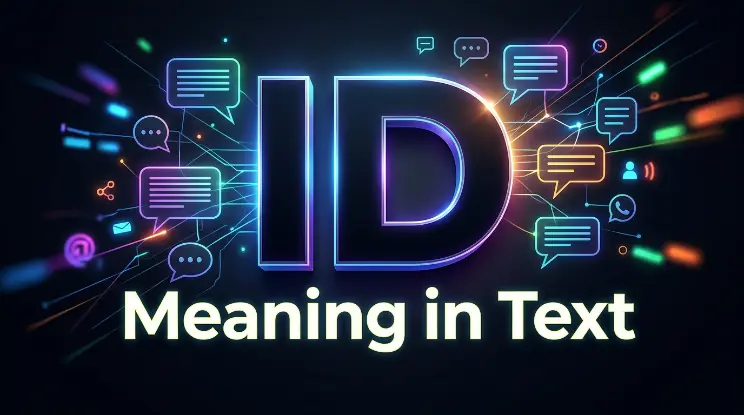
Have you ever received a text message that simply says “ID” and wondered what the person actually means? You are not alone. Short forms and abbreviations have become a normal part of texting, social media, gaming chats, and online conversations.
While some abbreviations are easy to understand, others can have different meanings depending on the situation. This is why understanding the ID meaning in text can help you communicate more clearly and avoid confusion.
In most conversations, “ID” can mean “I Don’t”, especially when people use it as a quick and casual response. For example, someone might text, “ID know what happened,” meaning “I don’t know what happened.” However, ID can also stand for other things, such as “identification” or “identity,” depending on the context. You may see it used differently in school, work, social media, gaming, or everyday texting.
What Does “ID” Mean in Texting?
In texting and casual online conversation, ID most commonly stands for “Identification” or is used as a verb meaning “to identify.” Depending on the sentence, it can refer to a physical identification document (like a driver’s license) or the act of figuring out what something is, like a song, show, or item.
If someone texts “forgot my id at home,” they’re talking about a physical identification card. But if someone posts a video and types “can someone id this song,” they’re asking others to identify or name the song playing in the background.
ID meaning in text really depends on context, but both uses circle back to the same core idea identifying or confirming what something or someone is.
Full Form / Expansion of “ID”
The most widely recognized full form of ID is:
I – Identi
D – fication
Put together: “Identification”
This is one of the more well-established abbreviations out there, used far beyond just texting slang it’s commonly used in official, everyday language too, like on forms, at security checkpoints, or when discussing legal documents.
When used as a verb (“to id something”), it functions as shorthand for:
“Identify”
Both uses stem from the same root concept of recognizing or confirming what something or someone is, whether that’s a physical document or an unknown piece of media.
Where “ID” is Commonly Used
ID shows up across a bunch of different online spaces, and its meaning shifts slightly depending on the context of the conversation.
Gaming Chats
In gaming communities, ID often comes up when discussing player identification or asking who someone is in-game. Something like “who’s that in the lobby, can someone id them” is a pretty typical example.
Social Media (Instagram, TikTok, Snapchat)
ID meaning in text is huge on TikTok, especially in comment sections under videos with background music. “Song id please” is one of the most common comments you’ll see under trending videos. On Instagram, people also ask for outfit or item IDs in comments.
Group Chats
In friend group chats, ID sometimes comes up in the context of needing physical identification for events, like concerts or bars. “don’t forget your id tonight” is a common reminder before heading out.
Forums and Comment Sections
On Reddit, ID is extremely common in identification-focused threads, like plant ID, bug ID, or item ID subreddits, where users post pictures asking others to help identify something.
Live Streams
During Twitch or YouTube Live streams, viewers sometimes ask “can you id that song” or similar questions in chat when background music plays during a stream.
Origin & History of “ID” as a Texting Abbreviation
Unlike a lot of newer internet slang, ID has been used as shorthand for “identification” for a very long time, well before texting or the internet existed. It’s a standard abbreviation used in official, legal, and everyday contexts, especially in relation to identification documents like driver’s licenses, passports, and ID cards.
When texting and instant messaging became widespread, ID naturally carried over as a convenient shorthand, since it was already a well-established, universally understood abbreviation. Its use as a verb (“to id something”) likely grew out of online communities, particularly music and media identification communities, where users needed a quick way to ask others to identify unknown songs, images, or items.
As platforms like Shazam grew popular for identifying music, and as social media comment sections became flooded with “song id?” requests under trending videos, this verb usage of ID became especially common in youth-driven online spaces like TikTok, where background music trends often go viral before anyone knows the actual song title.
There’s no single origin point for ID as internet slang, since its foundation as “identification” long predates digital communication, but its modern, casual usage as a verb has grown significantly alongside social media and content identification culture.
Other Possible Meanings of “ID”
While “identification” and “identify” are by far the most common ID meanings in text, a few other interpretations occasionally show up depending on context:
- “I’d” (I would/I had) – Sometimes typed without the apostrophe, especially in fast, casual typing. Example: “id go if I could” (meaning “I’d go if I could”).
- Freudian “Id” – In psychology-related conversations, ID refers to the primal, instinctual part of the human psyche, completely unrelated to its texting slang usage.
- In-Game or Account ID – Refers to a unique identifier or username, especially in gaming or app contexts, like a Discord ID or player ID.
These alternate meanings are usually pretty easy to distinguish from context, especially since “I’d” often appears in a sentence structure that makes the intended meaning obvious.
How to Use “ID” Correctly
Using ID naturally comes down to understanding which meaning fits the context. Here’s how to get it right:
- Use it as a noun for identification documents. Like “don’t forget your id” when referring to a physical ID card.
- Use it as a verb to ask for identification. Like “can someone id this song” when trying to figure out what something is.
- Match the platform’s culture. Song and item ID requests are especially common on TikTok and Reddit, so it fits naturally into those spaces.
- Keep it casual. Like most texting shorthand, ID works well in relaxed, informal conversations.
- Add context when needed. Since ID can mean different things, adding a little detail (like “song id” or “bring your id”) helps avoid confusion.
Example Conversations Using “ID”
Here are several real-style chat snippets showing how ID meaning in text plays out across different platforms.
1. Texting a Friend
Person A: “heading to the bar later, don’t forget your id”
Person B: “got it, already in my bag”
2. WhatsApp Chat
Person A: “need your id number for the booking”
Person B: “sending it over now”
3. Instagram DM
Person A: “obsessed with that jacket in your last post, can you id it”
Person B: “it’s from a thrift store, no brand sadly”
4. TikTok Comment Section
Comment 1: “song id please, this slaps”
Reply: “it’s in the caption, check the pinned comment”
5. Gaming Chat
Player A: “who’s that new player, can someone id them”
Player B: “not sure, never seen that username before”
6. Group Chat
Person A: “reminder, bring your id for the concert tonight”
Person B: “already put it in my pocket lol”
7. Snapchat Reply
Person A: “love this song in the background, id?”
Person B: “checking now, one sec”
8. Live Stream Chat
Viewer: “song id? this is fire”
Streamer: “it’s on my Spotify playlist, linked in bio”
9. Reddit Identification Post
Post: “found this in my backyard, can anyone id this plant?”
Comment: “looks like a type of ivy, pretty common actually”
10. Discord Server
User A: “what’s your discord id so I can add you”
User B: “sending it in dms now”
When NOT to Use “ID”
While ID itself is a widely accepted, standard abbreviation, there are still situations where clarity matters more than shorthand:
- Official or legal documents – Always spell out “identification” fully rather than using shorthand in formal paperwork.
- Professional emails requesting documents – Use full, clear language like “please provide identification” rather than casual shorthand.
- Formal conversations with authorities or officials – Stick to complete words when discussing identification with police, security, or government representatives.
- Ambiguous contexts without clarification – If there’s a chance “id” could be confused with “I’d” or another meaning, add context to avoid misunderstanding.
Since ID as “identification” is already widely accepted and understood, the bigger concern is making sure the specific meaning is clear rather than avoiding the abbreviation altogether.
Similar Texting Abbreviations and How “ID” is Different From Them
A few terms serve similar or related purposes to ID, though each has its own specific function.
- DM (Direct Message) – Refers to private messaging, completely unrelated to identification or identifying something.
- OP (Original Poster) – Refers to the person who created a post, sometimes relevant in identification threads but serving a different function.
- TBH (To Be Honest) – Unrelated in meaning, simply a tone-setting abbreviation rather than anything related to identification.
- IRL (In Real Life) – Refers to real-world identity or context, sometimes loosely related to identification but used very differently in conversation.
The main distinction with ID is its dual function it works both as a noun (referring to identification documents) and as a verb (asking someone to identify something), making it more versatile than most single-purpose texting abbreviations.
How to Respond When Someone Sends You “ID”
Responding to ID really depends on which meaning applies to the conversation. A few common approaches:
- If asked to identify something: “pretty sure it’s [name], let me double check”
- If reminded about identification documents: “got it, already have mine ready”
- If unsure of the answer: “not sure honestly, maybe someone else knows”
- If clarifying the request: “wait, do you mean my id card or can I identify something?”
Since context is key with ID, the best response usually starts with confirming which meaning is being referenced, especially if the message feels ambiguous.
Common Mistakes/Misunderstandings Around “ID”
A few things trip people up when it comes to ID:
- Confusing it with “I’d” – Since both are typed the same without punctuation, context is important to figure out which one is meant.
- Assuming it always means a physical document – In many online spaces, especially TikTok and Reddit, ID is used far more often as a verb meaning “identify.”
- Not providing enough context – Typing just “id?” without explanation can leave the other person unsure exactly what needs identifying.
- Overlooking gaming or account-related meanings – In gaming and app contexts, ID often refers to a username or account number rather than a physical document.
- Assuming everyone understands niche identification requests – Song or item ID requests are common in certain communities but might not make sense to someone unfamiliar with that platform’s culture.
FAQs
What does ID mean in text?
ID meaning in text most commonly refers to “identification,” either as a physical document or as a verb meaning “to identify” something.
Is ID the same as “I’d”?
No, ID refers to identification or identifying something, while “I’d” is a contraction of “I would” or “I had” they’re easy to confuse without context.
Why do people comment “song id?” on TikTok?
It’s a common way of asking other users to help identify the name of a song playing in the background of a video.
Is ID appropriate for professional messages?
Yes, ID as an abbreviation for “identification” is widely accepted even in professional contexts, though full spelling is preferred in official documents.
Where did ID come from?
It’s a long-standing abbreviation for “identification,” used in official and everyday contexts long before texting or social media existed.
How do I respond to an ID request?
If you know the answer, share it directly; if not, let the person know you’re unsure or suggest they ask elsewhere for help.
Conclusion
So the next time “id” shows up in your messages or a comment section, you’ll know exactly what’s being asked. At its core, ID meaning in text comes down to identification either a physical document or the act of identifying something, depending on the context of the conversation.
You’ll spot it everywhere from TikTok comment sections to group chat reminders to Reddit identification threads, working as both a noun and a verb depending on how it’s used. Pay attention to context, and you’ll always be able to tell exactly which meaning applies whenever you see ID pop up.

Amelia Brooks is a passionate language writer and word enthusiast at Meanzafy.com. I love exploring the meanings of words, text abbreviations, slang, and everyday English expressions to make language simple and easy for everyone. My goal is to create clear, accurate, and engaging content that helps readers quickly understand confusing words and phrases with confidence. Whether you’re looking for text meanings, grammar tips, or language guides, I’m here to make learning English enjoyable and practical.