You’re scrolling through a dating app conversation, or maybe chatting with friends in a group thread, and someone drops the letters “ONS” into the message. If you’ve never seen this abbreviation before, it can feel a little confusing, especially since it shows up in some fairly personal and casual conversations.
This term pops up frequently on dating apps, social media DMs, group chats among friends, and even in some online forums where people discuss relationships and dating culture. It’s short, direct, and carries a pretty specific meaning once you understand the context it’s usually used in.
In this guide, we’ll break down the full ONS meaning in text, where the term came from, how it’s used across different platforms, when it’s appropriate (and when it isn’t), and how to respond if someone brings it up in conversation. Let’s get into the details.
What Does “ONS” Mean in Texting?
The most common ONS meaning in text is “One Night Stand.” It’s used to refer to a single, casual sexual encounter between two people that isn’t meant to lead into an ongoing relationship or commitment.
You’ll typically see this abbreviation used on dating apps, in casual conversations between friends discussing their dating lives, or in more explicit contexts where people are being upfront about what kind of connection they’re looking for. It’s a quick, direct way of describing a specific kind of casual encounter without having to spell out the full phrase every time.
While “One Night Stand” is by far the most widely recognized ONS meaning in text, there are a couple of other contexts where the abbreviation can mean something different, which we’ll cover further down. But in the vast majority of casual chats and dating conversations, ONS refers specifically to this one meaning.
What Does “ONS” Stand for in Chat?
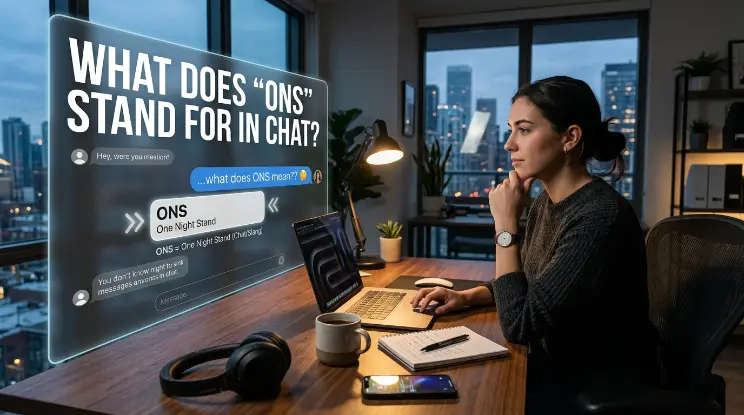
In chat and texting, ONS most commonly stands for “One-Night Stand.” It refers to a sexual encounter between people that is intended to be a single occasion rather than an ongoing relationship. The abbreviation is often used in dating conversations, social media, and informal messages. For example, someone might say, “I’m not looking for an ONS,” meaning they are not interested in a one-time sexual encounter.
What Do ONS Stand For?
ONS stands for “One-Night Stand.” It is a common abbreviation used in online dating, texting, and casual conversations. The term describes a short-term sexual encounter where the people involved generally do not expect an ongoing romantic or sexual relationship afterward. Its meaning is usually clear when it appears in a dating-related conversation.
What Does “ONS” Mean in a Relationship?
In a relationship context, ONS usually means “One-Night Stand.” It can come up when people are discussing dating history, relationship expectations, or casual encounters. For example, a person might ask, “Have you ever had an ONS?” meaning “Have you ever had a one-night stand?” The abbreviation itself describes the type of encounter and does not necessarily describe someone’s current relationship status.
What Does ONS Mean on Instagram?
On Instagram, ONS usually has the same meaning: “One-Night Stand.” You may see it in DMs, comments, dating-related posts, or profiles where people discuss casual dating or relationship preferences. For example, someone might write “No ONS” to indicate that they are not interested in a one-night stand. The exact meaning can still depend on the context of the post or message.
ONS Meaning in Dating
In dating, ONS means “One-Night Stand,” referring to a sexual encounter intended to happen only once. People may use the abbreviation when describing what they are looking for or what they are not interested in. For example, “ONS only” generally means the person is looking for a one-time encounter, while “No ONS” means they prefer something other than a one-time encounter.
Full Form / Expansion of “ONS”
Breaking the abbreviation down letter by letter:
O – One N – Night S – Stand
Put together, it spells out “One Night Stand.” This phrase itself has existed in everyday spoken English for a long time, well before texting shorthand became common. As dating culture increasingly moved into digital spaces like apps and messaging platforms, the phrase naturally got condensed into an abbreviation, since typing it out repeatedly in fast-paced conversations felt unnecessary.
Knowing this straightforward expansion makes the ONS meaning in text much easier to recognize whenever it comes up in conversation, particularly around dating and relationship discussions.
Where “ONS” is Commonly Used
ONS shows up in a fairly specific set of digital spaces, mostly centered around dating, relationships, and casual social conversations.
Dating Apps
This is by far the most common place you’ll encounter ONS. On apps like Tinder, Bumble, or Hinge, users sometimes state directly in their bios or opening messages that they’re only interested in an ONS, setting expectations upfront before any conversation develops further.
Social Media DMs
In private messages on platforms like Instagram or Twitter/X, ONS sometimes comes up when people are discussing past dating experiences or being upfront with someone they’ve matched with about what they’re looking for.
Group Chats
Among close friend groups, ONS often comes up casually when someone is recounting a dating story or discussing their weekend plans, especially in group chats where people talk openly about their personal lives.
Forums and Online Communities
On platforms like Reddit, particularly in relationship or dating advice subforums, ONS appears frequently in discussions and threads where people are seeking advice or sharing experiences related to casual dating.
Comment Sections
Occasionally, ONS shows up in comment sections of relationship-focused content, memes, or videos discussing dating culture and modern relationship trends.
Origin & History of “ONS” as a Texting Abbreviation
The phrase “one night stand” itself has been part of everyday English for decades, referring to a casual sexual encounter that isn’t followed by any ongoing relationship. The term is believed to have originated from theatrical slang, where a “one-night stand” originally referred to a single performance in one location before a traveling show moved on to the next town.
Over time, this phrase was borrowed into everyday conversation to describe a similarly brief, one-time romantic or sexual encounter, without any performance connotation intended.
As dating culture shifted heavily into digital spaces during the 2000s and 2010s, particularly with the rise of dating apps and instant messaging, the phrase naturally got abbreviated to “ONS” for convenience. Just like many other texting shortcuts, this abbreviation emerged organically among users who wanted a fast, casual way to reference the concept without repeatedly typing out the full phrase, especially in fast-moving conversations on dating apps where brevity is valued.
Today, the ONS meaning in text is widely recognized, particularly among people active on dating apps or those familiar with modern dating culture and its associated vocabulary.
Other Possible Meanings of “ONS”
While “One Night Stand” is the dominant meaning in casual texting and dating contexts, ONS can occasionally refer to something else depending on the setting of the conversation.
- Office for National Statistics: In the United Kingdom, ONS commonly refers to the Office for National Statistics, a government body responsible for producing official statistics on the economy, population, and society. This meaning shows up frequently in news articles, government reports, and academic discussions, completely unrelated to dating slang.
- Open Network for Security or similar technical acronyms: In certain technical or corporate contexts, ONS can stand for various industry-specific terms depending on the field being discussed.
Because of these differences, context always matters. If you see ONS in a personal chat about dating or relationships, it almost certainly refers to “One Night Stand.” If it shows up in a news article or government report, it’s very likely referring to the Office for National Statistics instead.
How to Use “ONS” Correctly
Using ONS appropriately requires being mindful of context, tone, and the nature of your relationship with the person you’re talking to.
A few tips to keep in mind:
- Use it only in relevant conversations. ONS is specifically tied to discussions about casual dating or hookup culture, so it doesn’t fit naturally into unrelated conversations.
- Be mindful of who you’re talking to. Since this term touches on personal and sometimes sensitive topics, it’s best used with people you’re comfortable discussing such subjects with openly.
- Keep communication clear and respectful. If you’re using ONS to set expectations with someone on a dating app, being upfront and respectful about intentions helps avoid misunderstandings.
- Avoid it in casual or unrelated chats. Dropping ONS into conversations where it doesn’t fit can come across as confusing or out of place.
Example Conversations/Chat Snippets Using “ONS”
Here are several natural, real-style examples showing how ONS is typically used across different platforms.
Example 1 (Dating app bio): Profile bio: not looking for anything serious right now, open to an ONS if we vibe
Example 2 (Dating app chat): Person A: hey, what are you looking for on here? Person B: honestly just an ONS, nothing serious
Example 3 (Friend group chat): Person A: how was your weekend? Person B: confused, had a random ONS with someone from the club lol
Example 4 (Instagram DM): Person A: you seem cool, just so you know I’m not looking for anything long term Person B: no worries, ONS is fine with me too
Example 5 (Reddit relationship advice thread): Post: is it normal to feel weird after an ONS? looking for some perspective
6 (Group chat, recounting a story): Person A: guess who had an ONS last night Person B: spill the details right now
7 (Dating app opening message): Person A: just to be upfront, I’m only interested in an ONS, hope that’s okay Person B: appreciate the honesty, same page here
8 (Friend catching up): Person A: so did anything happen with that guy from the bar? Person B: yeah, ended up being just an ONS, no hard feelings either way
9 (Comment on a relationship meme): Comment: this is exactly how every ONS story starts lol
10 (Text between close friends): Person A: not gonna lie, I think I want more than an ONS with him Person B: then maybe be upfront about that before things go further
When NOT to Use “ONS”
There are clear situations where using ONS would be inappropriate or out of place.
- Professional or workplace conversations. This term has no place in emails, workplace chats, or conversations with coworkers and managers.
- Formal or family settings. Bringing up ONS around family members, especially older relatives, or in formal social settings isn’t appropriate.
- Conversations with people you don’t know well. Since the term touches on personal and sensitive topics, using it too early with someone you’ve just met can come across as inappropriate or presumptuous.
- Public social media posts. While it can appear in private messages between consenting adults, using it in public posts or comments visible to a wide audience isn’t generally advisable.
- Conversations involving minors. This abbreviation and its meaning are strictly an adult topic and should never come up in any conversation involving anyone underage.
Similar Texting Abbreviations and How “ONS” is Different from Them
A handful of related abbreviations exist within dating and relationship slang, each carrying a distinct meaning.
- FWB (Friends With Benefits): Refers to an ongoing casual relationship involving physical intimacy without romantic commitment, unlike ONS, which refers specifically to a single encounter rather than a repeated arrangement.
- NSA (No Strings Attached): A broader term describing any casual encounter or relationship without emotional commitment, which can include but isn’t limited to a one-time encounter like ONS.
- DTR (Define The Relationship): Refers to a conversation aimed at clarifying the status or direction of a relationship, which is essentially the opposite intention of ONS.
- LTR (Long Term Relationship): Represents a serious, ongoing romantic commitment, standing in direct contrast to the brief, one-time nature of ONS.
The key distinction is that ONS specifically refers to a single, one-time encounter, while terms like FWB or NSA can describe ongoing casual arrangements involving multiple encounters over time.
How to Respond When Someone Sends You “ONS”
How you respond depends heavily on your own intentions and comfort level with the conversation.
- If you’re interested in the same thing: A straightforward reply like “sounds good, same page here” keeps communication clear and mutual.
- If you’re not interested: A polite but honest response like “I appreciate you being upfront, but that’s not what I’m looking for” avoids confusion and respects both people’s time.
- If you’re unsure: It’s completely fine to say something like “let’s just see where things go” if you don’t want to commit to a specific expectation right away.
- If discussing it with a friend: Responding with genuine curiosity or support, depending on the context of their story, keeps the conversation natural and judgment-free.
Being honest and respectful in your response is the most important part of these conversations, regardless of which direction you choose to take things.
Common Mistakes/Misunderstandings Around “ONS”
Even though ONS is a fairly well-known term, there are a few common points of confusion worth knowing about.
- Confusing it with the statistical organization. People unfamiliar with dating slang might search “ONS” online and encounter articles about the UK’s Office for National Statistics instead, leading to confusion about the intended meaning.
- Assuming it always implies no emotional connection at all. While ONS is technically defined as a one-time encounter, real feelings or unexpected connections can sometimes develop afterward, even if that wasn’t the original intention.
- Using it without clear communication. Since the term relates to personal boundaries and expectations, failing to communicate clearly about intentions can lead to misunderstandings between the people involved.
- Bringing it up in inappropriate settings. Using this term casually in mixed company or unrelated conversations can come across as inappropriate or awkward, given its adult and personal nature.
FAQs
What does ONS mean in a text message?
The ONS meaning in text is most commonly “One Night Stand,” referring to a single, casual encounter between two people without any expectation of an ongoing relationship.
Is ONS only used on dating apps?
No, while dating apps are the most common place to see it, ONS also comes up in casual conversations among friends, forum discussions, and social media messages.
Does ONS always mean something sexual?
In casual texting and dating contexts, yes, it specifically refers to a one-time sexual or romantic encounter. However, in other contexts like government or statistical discussions, it can mean something entirely different.
What’s the difference between ONS and FWB?
ONS refers to a single, one-time encounter, while FWB (Friends With Benefits) describes an ongoing casual arrangement involving repeated encounters over time.
Is it appropriate to use ONS in a professional setting?
No, ONS is strictly informal slang tied to personal and dating conversations, and it has no place in workplace, professional, or formal communication.
How should I respond if someone brings up ONS with me?
Being honest and clear about your own intentions works best, whether that means agreeing, politely declining, or expressing uncertainty about what you want.
Conclusion
To sum it all up, the ONS meaning in text most commonly refers to “One Night Stand,” describing a single, casual encounter between two people without expectations of anything further. It’s a term that shows up primarily in dating app conversations, casual chats among friends, and online discussions about modern dating culture.
While it does have a completely different meaning in certain formal or governmental contexts, like the Office for National Statistics in the UK, the casual dating interpretation remains by far the most common usage in everyday texting. Now that you understand the full ONS meaning in text, its origins, and how to use it appropriately, you’ll always know exactly what it means the next time you come across it in conversation.
Read More About This
DK Meaning in Text: What Does DK Stand for in Chat? for 2026
TW Meaning in Text Explained: Complete Guide with Examples 2026
“WLW” Meaning in Text: What It Really Means When Someone Sends It for 2026
WDYLL Meaning in Text: What It Really Stands For and How People Use It 2026

Ethan Parker
Hi, I’m Ethan Parker, a language enthusiast and content writer at Meanzafy.com. I enjoy exploring the meanings of words, slang, abbreviations, and everyday expressions to make English easier for everyone. My goal is to create clear, accurate, and beginner-friendly content that helps readers quickly understand what words and phrases really mean. Through every article, I aim to make learning English simple, practical, and enjoyable.