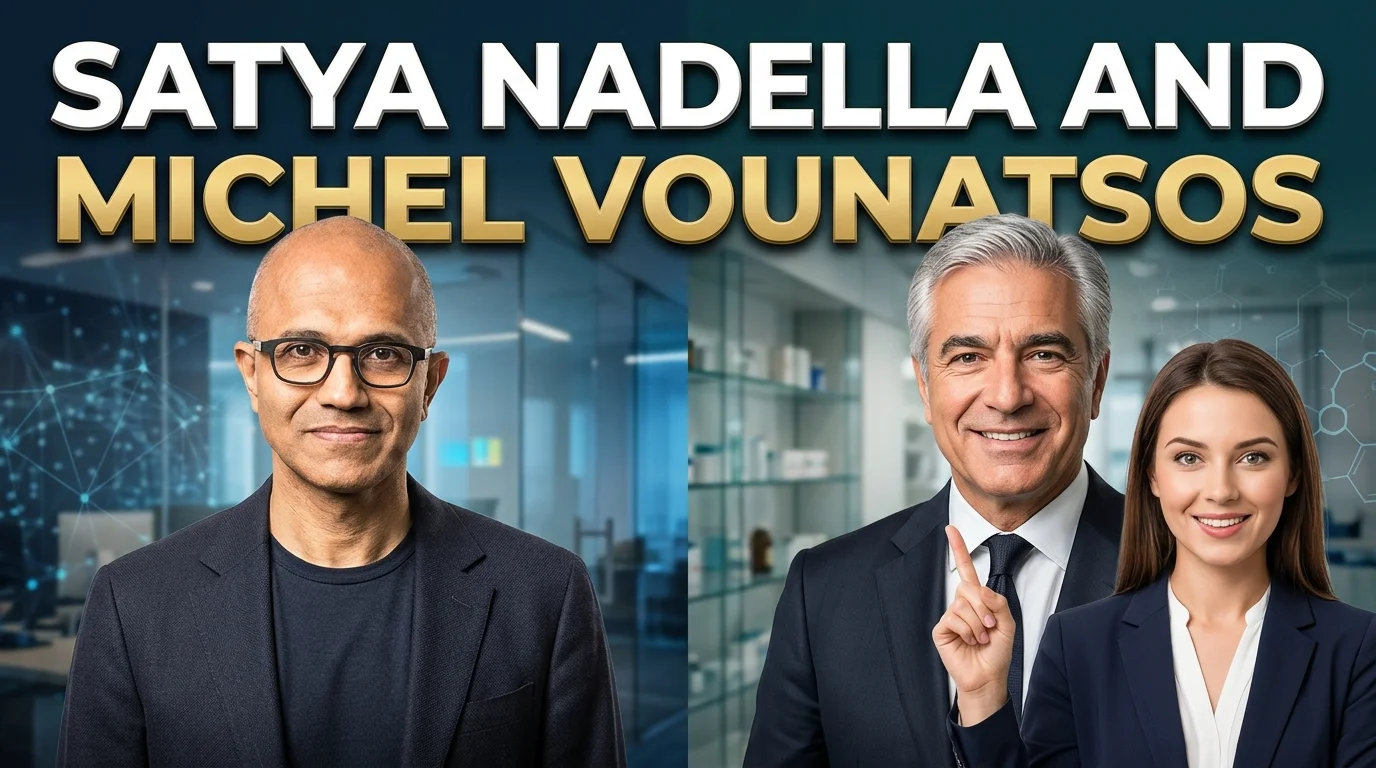
Satya Nadella and Michel Vounatsos are two experienced business executives whose professional journeys offer valuable insights into modern corporate leadership. Although they have built their careers in different industries, both have held important positions in internationally recognized companies and contributed to major business developments. Satya Nadella is best known for leading Microsoft through a significant transformation involving cloud computing, artificial intelligence, and digital innovation. Michel Vounatsos, on the other hand, is recognized for his pharmaceutical industry experience and his former leadership role at Biogen, a biotechnology company focused on developing treatments for serious diseases.
Their backgrounds are particularly interesting because they demonstrate two different routes to executive leadership. Nadella developed his career through engineering, computer science, and technology management, while Vounatsos combined medical education with international pharmaceutical business experience. Their stories show how education, professional development, strategic thinking, and adaptability can influence a person’s ability to lead a large organization.
People searching for Satya Nadella and Michel Vounatsos may also want to understand their biographies, career achievements, leadership styles, and professional connection. Although there is no widely established direct business partnership between the two executives, comparing their careers provides a useful perspective on the differences between technology and biotechnology leadership.
Who Is Satya Nadella?
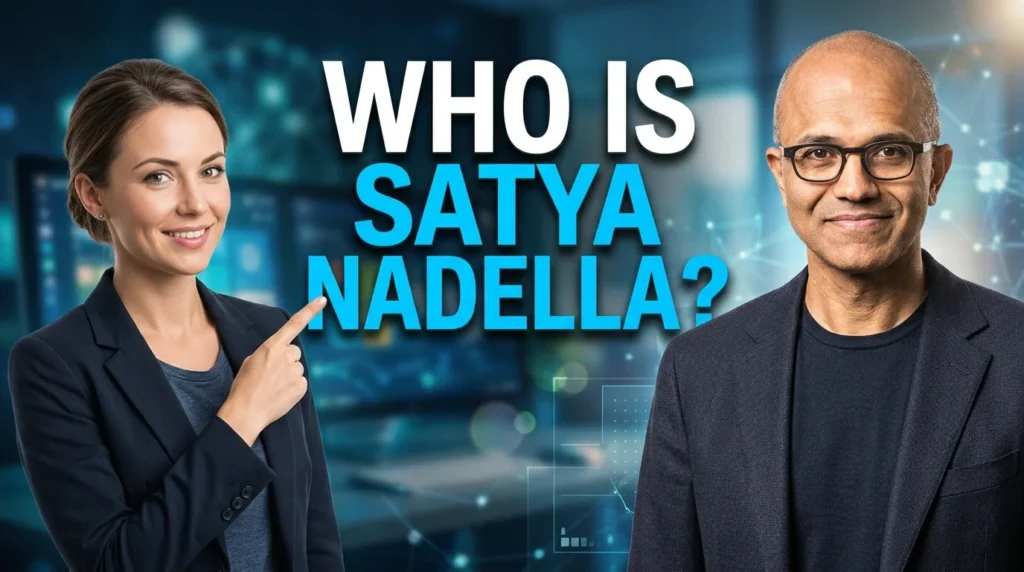
Satya Nadella is an Indian-born American business executive who serves as the chairman and chief executive officer of Microsoft. He is widely recognized for helping the company become a stronger competitor in cloud computing, enterprise technology, and artificial intelligence.
Born on August 19, 1967, in Hyderabad, India, Nadella grew up in an environment where education and professional development were important. His early interests included science, engineering, and technology. These interests eventually influenced his educational choices and professional direction.
Nadella first studied electrical engineering at Mangalore University in India. After completing his undergraduate education, he moved to the United States to continue his studies. He earned a master’s degree in computer science from the University of Wisconsin–Milwaukee and later completed an MBA at the University of Chicago.
His education provided a combination of technical and business knowledge. This combination became especially valuable as he moved from engineering-related responsibilities into senior management positions.
Satya Nadella’s Early Career and Professional Development
Before joining Microsoft, Nadella worked at Sun Microsystems. This experience introduced him to the competitive technology industry and helped him understand how large organizations develop and manage technical products.
In 1992, he joined Microsoft and began building a long-term career within the company. During his early years, he worked across different business and technology divisions, gaining experience in software development, online services, enterprise products, and management.
One important part of his career involved working with Microsoft’s business and server technologies. These areas helped him understand the needs of corporate customers, who required reliable software and infrastructure to operate their organizations.
Nadella gradually received greater responsibilities because of his ability to understand both technical challenges and business opportunities. He eventually became president of Microsoft’s Server and Tools business and later executive vice president of its Cloud and Enterprise group.
These positions prepared him to lead a company that was entering a period of major technological change.
Satya Nadella’s Appointment as Microsoft CEO
In February 2014, Nadella became Microsoft’s third chief executive officer, succeeding Steve Ballmer. His appointment came at an important time because the company needed to strengthen its position in an industry increasingly influenced by mobile devices, internet services, and cloud computing.
Rather than relying entirely on Microsoft’s traditional software business, Nadella encouraged the company to explore new opportunities. He promoted cloud services, subscription-based software, developer tools, and partnerships with other technology businesses.
He also encouraged employees to adopt a more collaborative attitude. His leadership philosophy emphasized learning from mistakes, listening to customers, and remaining open to new ideas.
In June 2021, Nadella additionally became Microsoft’s chairman. As of October 2026, he continues to hold both the chairman and CEO positions. His career is frequently discussed as an example of successful corporate transformation and strategic leadership.
Who Is Michel Vounatsos?
Michel Vounatsos is a French pharmaceutical executive known for his international business experience and former position as chief executive officer of Biogen.
His professional journey is different from Nadella’s because it developed within healthcare, pharmaceuticals, and biotechnology rather than software and digital technology.
Vounatsos received medical training at Université Victor Segalen Bordeaux II in France. He later earned an MBA from HEC Paris, giving him a combination of medical knowledge and business management education.
This educational background helped him develop an understanding of healthcare from both scientific and commercial perspectives.
Pharmaceutical companies operate in complicated environments. They must understand medical requirements, conduct research, manage product development, follow regulatory standards, and maintain relationships with healthcare professionals.
Vounatsos developed experience in these areas through his work at several major pharmaceutical organizations.
Michel Vounatsos’s Career at Merck
Before joining Biogen, Vounatsos spent approximately 20 years at Merck, one of the world’s major pharmaceutical companies.
During this period, he held management positions with increasing responsibility across different international markets. His professional experience included Europe, China, and the United States.
He eventually became president of Merck’s Primary Care Business Line and Merck Customer Centricity.
These responsibilities involved managing commercial operations and developing relationships with healthcare providers, customers, and other important stakeholders.
Working across different countries also helped him understand how pharmaceutical businesses must adapt to local healthcare systems and market conditions.
His experience at Merck became an important foundation for his later leadership responsibilities at Biogen.
Michel Vounatsos’s Appointment at Biogen
In April 2016, Vounatsos joined Biogen as executive vice president and chief commercial officer.
He was responsible for helping develop and execute the company’s global commercial strategy. His work involved supporting product growth, improving commercial operations, and preparing the organization for future treatments.
In December 2016, Biogen announced his appointment as chief executive officer, effective January 6, 2017.
His appointment reflected the company’s interest in a leader with international pharmaceutical experience and a strong understanding of commercial operations.
During his tenure, Vounatsos focused on maintaining Biogen’s position in neurological diseases, expanding its international business, and supporting research and development.
Michel Vounatsos’s Career After Biogen
Vounatsos left the Biogen CEO position in November 2022, when Christopher Viehbacher succeeded him.
His departure marked the end of an important period in his pharmaceutical career, but it did not mean that he left the biotechnology industry.
In March 2024, Lys Therapeutics announced his appointment as chairman of its board of directors. The French biotechnology company focuses on developing treatments for neurological and neurovascular diseases.
This role reflects his continued interest in pharmaceutical innovation and neurological research.
It also demonstrates how experienced executives can contribute to the biotechnology industry through governance, strategic guidance, and business development rather than serving as the CEO of a major pharmaceutical corporation.
Satya Nadella and Michel Vounatsos Relationship: Is There a Direct Connection?
One important question surrounding the keyword Satya Nadella and Michel Vounatsos relationship is whether these two executives have a direct professional or personal connection.
Both have worked in influential international companies, and their careers have attracted attention from the business community. However, there is no widely documented evidence establishing a significant direct partnership between them.
Nadella’s professional responsibilities have centered on Microsoft, while Vounatsos’s career has focused on pharmaceutical companies such as Merck and Biogen.
Their industries have different business models and customer requirements. Microsoft develops technology products and services, while Biogen focuses on biotechnology and medical treatments.
Nevertheless, their professional experiences can be compared through several important areas.
Both leaders have managed large organizations, worked with international teams, made strategic business decisions, and faced challenges involving innovation and competition.
Their careers also demonstrate how business leaders must understand the markets they serve and prepare their companies for future developments.
Therefore, the most meaningful connection between Satya Nadella and Michel Vounatsos is their experience as senior executives in important global industries, rather than a confirmed personal relationship or joint business project.
Satya Nadella and Michel Vounatsos Comparison
A comparison of their careers reveals similarities and differences in their educational backgrounds, management responsibilities, industries, and professional achievements.
Although both have held executive positions, their career paths developed around different types of business challenges.
| Comparison factor | Satya Nadella | Michel Vounatsos |
| National background | Indian-born American | French |
| Main industry | Technology | Pharmaceutical and biotechnology |
| Education | Engineering, computer science, MBA | Medical training, MBA |
| Major company | Microsoft | Biogen and Merck |
| Leadership position | Microsoft chairman and CEO | Former Biogen CEO |
| Main expertise | Cloud computing, software, AI | Pharmaceutical business and commercial strategy |
| CEO appointment | February 2014 | January 2017 |
| Major focus | Digital transformation | Healthcare and neurological treatments |
Differences in Their Educational Backgrounds
One major difference between the two executives is their educational preparation.
Nadella studied electrical engineering before developing advanced knowledge of computer science. His education helped him understand how technology systems work and how they can be used to solve business problems.
Vounatsos received medical training before completing his business education. His academic background helped him understand healthcare while developing the management skills required to work in international pharmaceutical companies.
Both executives eventually combined specialized knowledge with business administration.
Their journeys demonstrate that corporate leadership does not require one particular educational background. Technical, scientific, and commercial knowledge can all provide useful foundations for management careers.
Differences in Their Industries
Another important difference involves the industries they have led.
Microsoft operates in a competitive technology environment where companies must continually develop new products and improve existing services.
Biogen operates in biotechnology, where research programs can take years and require substantial investment before producing a commercially available treatment.
Technology companies often respond to changing customer requirements through software updates, new platforms, and product launches.
Pharmaceutical companies must follow strict scientific and regulatory processes before introducing treatments to patients.
These differences influence how executives plan investments, manage employees, and evaluate business performance.
Similarities in Their Professional Experience
Despite their different industries, Nadella and Vounatsos share several professional characteristics.
Both developed their careers through years of experience rather than moving directly into executive leadership.
They worked in different management positions, learned about international business operations, and gained responsibilities involving strategic planning.
Both also operated in industries where innovation is essential.
Their professional experiences show that effective executives must combine industry knowledge, communication skills, and the ability to make decisions under pressure.
Satya Nadella Leadership Style and Management Philosophy
The Satya Nadella leadership style is frequently associated with collaboration, continuous learning, innovation, and organizational transformation.
When he became Microsoft’s CEO, he recognized that the company needed more than new products. It also needed a different approach to internal communication and business development.
One of his most recognizable management ideas is the growth mindset.
A growth mindset encourages people to view challenges as opportunities to improve. Instead of assuming that existing knowledge is enough, employees should remain willing to learn and develop new skills.
Building a Collaborative Workplace
Nadella encouraged Microsoft employees to work together rather than focusing exclusively on individual departments and established business divisions.
This approach was important because large technology companies can sometimes struggle with internal competition and communication barriers.
By encouraging collaboration, Nadella helped create an environment where teams could share knowledge and develop products that addressed wider customer needs.
He also emphasized empathy as an important leadership quality.
Understanding customers, employees, and business partners allows managers to make more thoughtful decisions. This approach can help companies develop products that solve real problems rather than simply following industry trends.
Encouraging Continuous Innovation
Another major feature of Nadella’s management philosophy is continuous innovation.
Technology companies cannot remain successful by depending entirely on products that were popular many years earlier.
Nadella recognized that Microsoft needed to invest in cloud infrastructure, artificial intelligence, productivity software, and developer services.
His approach encouraged employees to consider new opportunities while continuing to improve the company’s established products.
This strategy helped Microsoft strengthen its competitive position and expand its presence in different technology markets.
Michel Vounatsos Leadership Style and Business Approach
The Michel Vounatsos leadership style developed through his experience in international pharmaceutical operations and biotechnology management.
His professional background involved managing commercial organizations, supporting pharmaceutical products, and developing business strategies across different healthcare markets.
Unlike technology executives, pharmaceutical leaders must work within an environment where scientific research and regulatory decisions have a major influence on business performance.
Focus on International Commercial Operations
Vounatsos spent many years working in different international markets during his time at Merck.
This experience helped him understand how healthcare systems, customer expectations, and commercial opportunities differ between countries.
A pharmaceutical company cannot necessarily use the same strategy in every market. Pricing, distribution, regulations, healthcare access, and medical practices may vary significantly.
His international background became valuable when he joined Biogen and assumed responsibility for its global commercial organization.
Supporting Scientific Development
Another important part of his executive experience involved supporting Biogen’s research ambitions.
The biotechnology industry depends on the development of new treatments that can address unmet medical needs.
However, scientific discoveries must be evaluated carefully before they can become approved medicines.
Executives must make decisions about research investment, clinical programs, partnerships, and commercial preparation.
Vounatsos led Biogen during a period when neurological research and Alzheimer’s treatment development received considerable attention.
His experience demonstrates the difficulty of balancing commercial expectations with scientific uncertainty.
Satya Nadella Business Achievements at Microsoft
Satya Nadella’s business achievements are closely connected to Microsoft’s transformation into a broader cloud and AI-focused technology company.
When he became CEO, Microsoft was already a major global business. However, the company needed to respond to changes in how people and organizations used technology.
Nadella helped guide this transition by expanding existing business areas and encouraging investment in emerging technologies.
Growth of Microsoft Azure
One of Nadella’s most important strategic priorities was cloud computing.
Microsoft Azure allows businesses to access computing infrastructure, databases, storage, software development tools, and artificial intelligence services through cloud-based platforms.
Cloud technology has become important because organizations increasingly need flexible systems that can support remote work, digital operations, and large amounts of data.
Under Nadella’s leadership, Azure became a central part of Microsoft’s business strategy.
Expansion of Microsoft 365
Microsoft also strengthened its productivity software business.
Microsoft 365 combines familiar applications with cloud-based services that support communication, document creation, collaboration, and business operations.
This approach helped Microsoft move further toward subscription-based services.
Customers can access productivity tools across different devices and work environments, making the software more flexible for modern organizations.
Artificial Intelligence Development
Artificial intelligence has become another major area of Microsoft’s strategy.
The company has invested in AI research, infrastructure, partnerships, and products that integrate intelligent capabilities into business software.
Microsoft’s AI development has expanded opportunities in productivity, software development, enterprise services, and data analysis.
These investments demonstrate Nadella’s focus on preparing Microsoft for future technological developments.
Michel Vounatsos Business Achievements at Biogen
Michel Vounatsos’s business achievements are connected to his work in international pharmaceutical operations and his leadership of Biogen from 2017 to 2022.
His responsibilities included supporting commercial performance, managing strategic priorities, and guiding the company through important research and development decisions.
Expanding Biogen’s International Business
During his time at Biogen, Vounatsos continued working on the company’s international commercial development.
Biogen operated in multiple markets and focused on treatments for neurological and other serious diseases.
Expanding pharmaceutical operations internationally requires an understanding of different healthcare systems and regulatory environments.
His previous experience at Merck helped him manage these responsibilities.
Supporting the Neurology Business
Biogen has a long history of developing treatments for neurological conditions.
During Vounatsos’s leadership, the company continued focusing on multiple sclerosis, spinal muscular atrophy, and neurodegenerative diseases.
The development and commercialization of SPINRAZA, a treatment for spinal muscular atrophy, was among the important developments surrounding Biogen during this period.
The company also continued exploring research opportunities involving Alzheimer’s disease and other neurological conditions.
Leading During a Difficult Period
One of the most challenging aspects of Vounatsos’s tenure was Biogen’s work on aducanumab, an Alzheimer’s treatment.
The US Food and Drug Administration granted the drug accelerated approval in 2021, but the decision attracted substantial scientific and medical debate.
The controversy involved questions about clinical evidence, potential benefits, safety, and the interpretation of research results.
This experience illustrates the challenges pharmaceutical leaders face when a treatment generates major commercial expectations but its clinical value remains disputed.
Vounatsos’s time as CEO ended in November 2022, following the company’s decision to appoint a new chief executive.
Microsoft Business Strategy Compared With Biogen Business Strategy
Microsoft and Biogen provide useful examples of how companies in different industries develop strategies to achieve long-term objectives.
The Microsoft business strategy under Nadella has emphasized cloud computing, software subscriptions, artificial intelligence, and enterprise technology.
The Biogen business strategy has focused on biotechnology research, specialized medicines, international commercial operations, and neurological diseases.
Microsoft’s Technology-Focused Strategy
Microsoft has developed an interconnected business ecosystem.
For example, Azure supports cloud infrastructure, while Microsoft 365 provides productivity services. Artificial intelligence capabilities can be integrated into different products, giving customers additional reasons to use the company’s technology.
This strategy allows Microsoft to serve individuals, businesses, governments, and developers.
It also helps the company compete in markets where customers increasingly expect flexible digital solutions.
Biogen’s Research-Focused Strategy
Biogen operates under a different business model.
Its business depends on discovering, developing, testing, and commercializing medical treatments.
Research and development are essential because pharmaceutical companies must continuously explore new therapies to maintain their long-term competitiveness.
However, research programs carry considerable uncertainty. Some treatments may fail during clinical trials, while others may receive regulatory approval but face commercial challenges.
Biogen must therefore balance scientific investment with financial planning and patient needs.
Major Strategic Differences
| Area | Microsoft | Biogen |
| Primary objective | Digital innovation | Medical innovation |
| Research focus | Software, cloud, AI | Medicines and biotechnology |
| Development process | Technology development and testing | Scientific research and clinical trials |
| Market challenges | Competition and rapid technological change | Regulatory and clinical uncertainty |
| Customer needs | Productivity and digital services | Medical treatment and patient access |
| Long-term investment | Cloud and AI infrastructure | Research and development |
Both companies demonstrate that successful strategies must reflect the specific requirements of their industries.
Major Challenges Faced by Both Executives
Leadership becomes particularly difficult when an organization faces competition, uncertainty, and pressure to deliver results.
Nadella and Vounatsos experienced different challenges, but their careers illustrate the importance of adapting to changing business environments.
Challenges Faced by Satya Nadella
When Nadella became Microsoft CEO, the company faced competition in several important areas.
Smartphone technology had changed the way people accessed digital services, while cloud computing was creating new opportunities for technology companies.
Microsoft needed to strengthen its position without losing the value of its established software business.
Nadella also had to encourage cultural change within a large organization.
Changing company culture is difficult because employees may be accustomed to established processes and management practices.
He addressed these challenges by emphasizing collaboration, learning, and openness to new opportunities.
More recently, artificial intelligence has introduced additional responsibilities involving data privacy, cybersecurity, infrastructure investment, competition, and responsible development.
Challenges Faced by Michel Vounatsos
Vounatsos faced the complexities of leading a pharmaceutical company during a period of important scientific and commercial developments.
Biogen needed to maintain its existing business while investing in future treatments.
One of the most widely discussed challenges involved aducanumab.
The drug’s accelerated approval created debate because experts disagreed about the strength and interpretation of the available evidence.
Biogen also faced questions about treatment costs, patient access, and commercial viability.
These circumstances demonstrate that pharmaceutical executives must balance financial performance with scientific standards and public expectations.
What Their Challenges Teach Us
Their experiences provide several important lessons.
First, executives must understand that successful strategies require continuous evaluation.
Second, companies should not ignore emerging risks simply because existing products are performing well.
Third, leaders must communicate clearly with employees, customers, investors, and other stakeholders.
Finally, organizations should learn from difficult decisions rather than repeating unsuccessful approaches.
What Future Business Leaders Can Learn From Their Careers
The professional journeys of Satya Nadella and Michel Vounatsos provide useful lessons for students, entrepreneurs, managers, and aspiring executives.
Their careers demonstrate that leadership develops through education, practical experience, and the ability to handle increasing responsibilities.
1. Combine Education With Practical Experience
Nadella’s engineering and computer science education helped him understand technology, while his MBA provided business knowledge.
Vounatsos combined medical training with business management education.
Both examples show that specialized knowledge can become more valuable when combined with practical management experience.
2. Understand the Industry
Business leaders must understand the markets in which their organizations operate.
Technology executives need to follow developments in software, cloud infrastructure, and artificial intelligence.
Pharmaceutical executives must understand scientific research, healthcare requirements, and regulatory processes.
Industry knowledge helps managers make informed decisions and identify opportunities.
3. Build Strong Communication Skills
Large companies depend on effective communication.
Executives must explain business strategies, understand employee concerns, coordinate departments, and maintain relationships with external stakeholders.
Nadella’s collaborative approach and Vounatsos’s international commercial experience both demonstrate the importance of communication.
4. Think About Long-Term Growth
Short-term performance is important, but successful organizations also need long-term plans.
Microsoft invested in cloud computing and artificial intelligence to prepare for future technology markets.
Biogen invested in research and development to explore new medical treatments.
Both examples show that long-term growth requires patience, planning, and appropriate investment.
5. Accept Responsibility for Difficult Decisions
Leadership involves making decisions even when the outcomes are uncertain.
Executives must evaluate available information, consider possible risks, and accept responsibility for the results.
The experiences of Nadella and Vounatsos demonstrate that managing a company requires both confidence and the willingness to adjust strategies when circumstances change.
The Connection Between Technology and Biotechnology
Although Microsoft and Biogen operate in different industries, technology and biotechnology increasingly share common interests.
Healthcare organizations now use digital systems to manage information, improve communication, and support research.
Cloud computing can help researchers and medical institutions manage large datasets. Artificial intelligence can assist with data analysis and the identification of patterns that may support scientific investigation.
Biotechnology companies can also use digital tools to improve research coordination and operational efficiency.
However, these technologies must be used responsibly. Healthcare information requires strong privacy protections, and AI-generated scientific findings must be carefully validated.
This growing relationship between technology and healthcare provides an interesting way to understand the broader professional worlds associated with Nadella and Vounatsos.
Their careers demonstrate that innovation does not happen in isolation. Different industries can contribute knowledge, tools, and services that support progress in other sectors.
Importantly, this industry overlap should not be confused with evidence of a direct partnership between the two executives.
Public Recognition and Professional Reputation
Satya Nadella and Michel Vounatsos have developed professional reputations through their responsibilities at major international companies.
Nadella is widely recognized for his contribution to Microsoft’s strategic transformation. His leadership is frequently discussed in connection with cloud computing, digital services, artificial intelligence, and organizational culture.
His professional journey has also attracted attention because he became the leader of Microsoft after spending many years developing his career within the company.
Vounatsos is recognized for his international pharmaceutical experience and leadership at Biogen.
His career at Merck and Biogen demonstrates experience in global commercial operations, pharmaceutical strategy, and biotechnology management.
His later appointment as chairman of Lys Therapeutics also reflects his continued involvement in neurological research and biotechnology governance.
Their reputations are connected to different areas of business, but both provide examples of how experienced executives can influence organizations through strategic leadership.
Frequently Asked Questions
1. Who Are Satya Nadella and Michel Vounatsos?
Satya Nadella is the chairman and CEO of Microsoft, known for leading the company’s transformation toward cloud computing and artificial intelligence. Michel Vounatsos is a French pharmaceutical executive who served as Biogen’s CEO from 2017 until November 2022.
2. Are Satya Nadella and Michel Vounatsos Related?
There is no widely documented evidence that Satya Nadella and Michel Vounatsos are relatives or have a personal relationship. They are recognized for their separate careers in technology and biotechnology.
3. What Is Satya Nadella Famous For?
Satya Nadella is famous for leading Microsoft since 2014 and strengthening its position in cloud computing, enterprise software, and artificial intelligence. He is also recognized for promoting collaboration and a growth mindset within the company.
4. What Is Michel Vounatsos Known For?
Michel Vounatsos is known for his pharmaceutical career, including approximately 20 years at Merck and his leadership as Biogen’s CEO from 2017 to 2022. He later became chairman of the board of Lys Therapeutics.
5. What Is the Educational Background of Satya Nadella?
Nadella studied electrical engineering at Mangalore University, earned a master’s degree in computer science from the University of Wisconsin–Milwaukee, and completed an MBA at the University of Chicago.
6. What Is the Educational Background of Michel Vounatsos?
Vounatsos received medical training at Université Victor Segalen Bordeaux II in France and earned an MBA from HEC Paris.
7. What Is the Main Difference Between Their Careers?
Nadella developed his career in technology and currently leads Microsoft, while Vounatsos built his career in pharmaceuticals and biotechnology and formerly led Biogen. Their professional responsibilities reflect the different requirements of their industries.
Conclusion
Satya Nadella and Michel Vounatsos represent two different but valuable examples of international corporate leadership. Nadella has established his reputation through his work at Microsoft, where he helped expand cloud computing, strengthen enterprise services, and accelerate artificial intelligence development. Vounatsos built his reputation through decades of pharmaceutical experience, including his leadership of Biogen and his later involvement with Lys Therapeutics.
Their professional journeys demonstrate that successful executives can come from different educational and professional backgrounds. Nadella’s engineering and business education helped him lead technological transformation, while Vounatsos’s medical training and pharmaceutical experience prepared him for the challenges of biotechnology management.

Amelia Brooks is a passionate language writer and word enthusiast at Meanzafy.com. I love exploring the meanings of words, text abbreviations, slang, and everyday English expressions to make language simple and easy for everyone. My goal is to create clear, accurate, and engaging content that helps readers quickly understand confusing words and phrases with confidence. Whether you’re looking for text meanings, grammar tips, or language guides, I’m here to make learning English enjoyable and practical.