You’re texting a friend, and they mention meeting someone off “FB,” or maybe they casually describe a situation and toss in “FB” like it’s obvious what they mean. Depending on the conversation, you might immediately think of one specific platform or you might be left second-guessing yourself, especially if the context feels a little different than expected.
“FB” is one of those abbreviations that seems simple on the surface but actually carries more than one meaning depending on where and how it’s used. It shows up in casual texting, social media bios, dating conversations, and group chats, and the meaning can shift depending on the situation entirely.
So what exactly is the FB meaning in text, and how do you know which version someone’s referring to? By the end of this article, you’ll fully understand the FB meaning in text, where it comes from, how to use it appropriately, and how to avoid any awkward mix-ups. Let’s break it down.
What Does “FB” Mean in Texting?
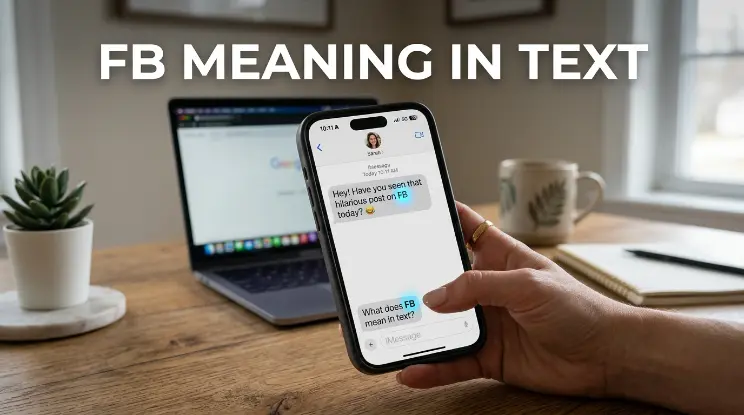
The most common and widely recognized FB meaning in text is simply “Facebook.” It’s used constantly in casual conversation to reference the social media platform whether someone’s talking about a post, a message, an event, or just checking if you’re active on it.
However, FB also has a second, much more casual and adult-oriented meaning: “F* Buddy.”** This version is used to describe a purely physical, no-strings-attached relationship between two people, without romantic commitment involved. This meaning shows up far more in personal or private conversations than in public posts, so context is everything here.
The FB meaning in text really depends heavily on the setting. In most everyday, casual, or public conversations, it’s safe to assume someone means Facebook. But in more private, adult-oriented, or relationship-related conversations, it could carry the second meaning entirely. Reading the surrounding context is key to avoiding confusion.
Full Form / Expansion of “FB”
FB most commonly stands for “Facebook,” the widely used social media platform that’s been around since the mid-2000s. It’s one of the simplest and most universally recognized abbreviations out there, similar to how “IG” is shorthand for Instagram.
The second, less formal expansion is “F* Buddy,”** referring to a casual physical relationship without emotional commitment. This version leans into adult slang and is typically only used in specific, private, or mature conversations definitely not something you’d casually drop in a work chat or family group text.
Because both expansions share the same two letters, context clues from the rest of the conversation are essential in figuring out which one someone actually means.
Where “FB” is Commonly Used
FB shows up across a wide range of digital spaces, and the meaning often shifts depending on where you encounter it:
Gaming Chats
In gaming chats, FB is rarely used for its slang meaning it’s almost always a reference to Facebook, usually when players are exchanging contact info or planning to connect outside the game.
Social Media (Instagram, TikTok, Twitter/X)
Across most social platforms, FB almost always refers to Facebook whether someone’s cross-promoting a post, mentioning an event, or asking if you’re active there.
Forums and Comment Sections
On forums and comment threads, FB is typically used in its Facebook meaning, especially when people are sharing links or referencing content originally posted there.
Group Chats
This is where things can get a little more nuanced. Among close friends, especially in more mature or private conversations, FB might occasionally carry its adult slang meaning though the Facebook meaning is still by far the more common use, even in casual chats.
Live Streams
In live chat during streams, FB is almost exclusively used to reference Facebook, especially when streamers mention cross-posting content or invite viewers to follow them there.
Origin & History of “FB” as a Texting Abbreviation
The origin of “FB” as shorthand for Facebook is pretty straightforward it emerged naturally once the platform launched in 2004 and quickly became one of the most dominant social networks in the world. As texting and casual online conversation became more abbreviation-heavy throughout the 2000s and 2010s, shortening “Facebook” down to two letters just made sense, especially since people were referencing the platform constantly in daily conversation.
The slang meaning, “F*** Buddy,” developed separately and has roots in broader casual dating and hookup culture terminology that existed even before texting became dominant. As with a lot of adult-oriented slang, it made its way into text-based abbreviation culture as people looked for more discreet or quicker ways to reference casual relationships in private conversations.
Interestingly, both meanings coexist without much real-world confusion most of the time, simply because the contexts they appear in are usually pretty different. Facebook-related conversations tend to be casual but public-facing, while the slang version almost always appears in more private, one-on-one, or adult-themed conversations.
Other Possible Meanings of “FB”
While Facebook is the dominant FB meaning in text, a few other interpretations exist depending on context:
- F* Buddy**: A casual, physical-only relationship without romantic commitment, used mostly in private conversations.
- Facebook (general reference): Talking about posts, messages, events, or activity on the platform itself.
- Feedback: Occasionally used in more professional or workplace-adjacent casual chats, especially when discussing projects or performance reviews.
- Flashback: Sometimes used casually, especially paired with nostalgic posts or “FB to that time…” captions.
- Foul Ball: In sports-related conversations, particularly baseball, FB can occasionally reference this term among fans.
The exact FB meaning in text depends heavily on the topic being discussed, so it’s always worth reading the full message rather than assuming right away.
How to Use “FB” Correctly
Using FB appropriately comes down to context and audience. Here are some tips:
- Default to Facebook in most casual settings. Unless the conversation is clearly private or adult-themed, FB almost always means Facebook.
- Be mindful of audience with the slang meaning. The “F*** Buddy” version should only be used in private, casual conversations with people who understand that context.
- Add context if there’s room for confusion. If you’re unsure whether someone will interpret FB correctly, adding a little extra detail helps avoid mix-ups.
- Avoid the slang meaning in public or professional spaces entirely. It’s not appropriate for group chats with mixed company, workplace messages, or public comment sections.
Example Conversations/Chat Snippets Using “FB”
Here’s how the FB meaning in text plays out in real, everyday conversations:
1. Group Chat (social media reference)
Sara: did you see the event page on FB?
Mia: yeah, just RSVP’d
2. WhatsApp Chat
Friend: I posted the vacation pics on FB
You: omg I’m checking now
3. Instagram DM
Friend: are you even on FB anymore?
You: barely, I mostly just use it for marketplace lol
4. Casual Texting (private conversation)
Friend: so are you guys official or just FB?
You: nah, just keeping it casual for now
5. Twitter/X Reply
User: crossposting this on FB too
You: good call, more people will see it there
6. Group Chat (nostalgia)
Friend1: FB memories just reminded me of that trip lol
You: omg that was such a good summer
7. Family Group Chat
Aunt: I sent you a message on FB, did you see it?
You: just replied!
8. Live Stream Chat
Viewer: are you streaming this on FB too?
Streamer: yep, cross-posting live right now
9. Casual Texting (slang meaning)
Friend: wait, are you two dating now?
You: nah, still just FB, nothing serious
10. Comment Section
User: this event’s also posted on FB if anyone wants details
You: thanks, just found it there
As these examples show, the FB meaning in text depends heavily on the surrounding context most of the time it’s Facebook, but every once in a while, especially in private conversations, it can mean something else entirely.
When NOT to Use “FB”
Even though FB is common and generally low-risk in its Facebook meaning, there are situations where caution is needed:
- Professional emails or workplace messages while referencing Facebook casually is usually fine, the slang meaning should never come up in professional settings.
- Mixed-company group chats using FB in its adult slang sense in a group with family, coworkers, or people who might not share that context can cause serious confusion or awkwardness.
- Public comment sections or posts the slang meaning should stay strictly in private conversations, not public-facing platforms.
- Conversations with unclear context if you’re not sure how someone will interpret FB, it’s safer to just spell out “Facebook” to avoid any mix-ups.
Similar Texting Abbreviations and How “FB” is Different from Them
There are a few other abbreviations that overlap or get confused with FB:
- IG (Instagram): Refers to a different platform entirely, though it’s often used in the same casual context as FB.
- FWB (Friends With Benefits): Very similar to the slang meaning of FB, but implies a friendship component alongside the physical relationship.
- DM (Direct Message): Refers to private messaging on social platforms, often used alongside FB in conversation.
- TBT (Throwback Thursday): Similar to FB’s occasional “flashback” meaning, but specifically tied to a weekly social media trend.
The biggest difference is that FB meaning in text is highly context-dependent between a social media platform and a private relationship term, while abbreviations like FWB are more consistently understood as relationship-related without much ambiguity.
How to Respond When Someone Sends You “FB”
If someone sends you “FB” in a conversation, here’s how to read the situation:
- If the context is clearly casual and public: Respond naturally assuming they mean Facebook no need to overthink it.
- If the conversation is private or relationship-related: Pay attention to the surrounding context, since it might be referencing a casual relationship instead.
- If you’re genuinely unsure: It’s totally fine to ask directly, like “wait, do you mean Facebook or something else?” to avoid confusion.
- If it feels like an assumption you’re not comfortable with: You can clarify your own situation openly rather than letting ambiguity linger.
Common Mistakes/Misunderstandings Around “FB”
- Assuming it always means Facebook. While this is true most of the time, context can occasionally point to something else entirely.
- Using the slang meaning in the wrong setting. This can lead to serious miscommunication or awkwardness if used with the wrong audience.
- Not clarifying when context is unclear. Assuming the wrong meaning can lead to confusing or even embarrassing misunderstandings.
- Mixing it up with similar abbreviations. FB and FWB are related but not identical, so it’s worth knowing the distinction.
- Forgetting platform-specific norms. What FB means on a public post is usually very different from what it might mean in a private, one-on-one text.
FAQs
What does FB mean in text?
FB meaning in text most commonly refers to “Facebook,” though in private or adult conversations it can also mean “F*** Buddy.”
How do I know which meaning of FB someone means?
Context is key public, casual conversations almost always mean Facebook, while private or relationship-focused conversations might imply the slang meaning.
Is FB the same as FWB?
They’re similar but not identical FWB (Friends With Benefits) implies a friendship component, while FB’s slang meaning is more purely physical.
Can I use FB on Instagram or TikTok?
Yes, it’s commonly used to reference Facebook casually across nearly every platform.
Is it okay to use FB at work?
Referencing Facebook casually is generally fine, but the slang meaning should never be used in professional settings.
Does FB have other meanings besides these two?
Occasionally, yes it can also mean “feedback,” “flashback,” or even “foul ball” depending on the topic of conversation.
Conclusion
At the end of the day, the FB meaning in text depends heavily on where and how it’s used. Most of the time, it simply refers to Facebook quick, casual, and easy to understand. But in more private or mature conversations, it can carry a completely different meaning tied to casual relationships.
As with most abbreviations that carry multiple meanings, context is everything. Now that you understand the full FB meaning in text, you’ll be able to read between the lines and figure out exactly what someone means the next time it shows up in your messages.

Hi, I’m Henry Walker, a language enthusiast and content writer at Meanzafy.com. I enjoy exploring the meanings behind words, slang, abbreviations, text messages, and everyday expressions to make English easier for everyone. My goal is to create clear, accurate, and easy-to-read guides that help readers quickly understand confusing terms and use them with confidence. Whether you’re looking for the meaning of a text abbreviation or the explanation of a common phrase, I’m here to provide reliable, beginner-friendly content you can trust.