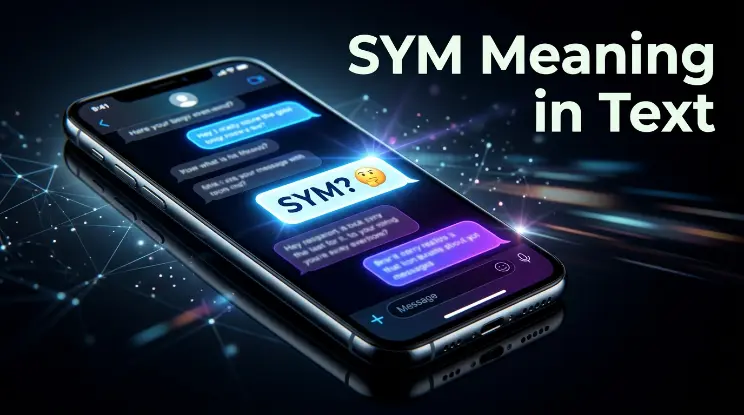
You tell a friend some shocking news, share an unexpected update, or drop a piece of juicy gossip, and the reply you get back is just three letters: “SYM.” At first glance, it looks a little harsh, almost like they’re telling you to be quiet. But something about the tone of the conversation makes it feel like that’s not quite what they mean.
If you’ve paused mid-text wondering whether SYM was playful or genuinely rude, you’re definitely not the only one. It’s one of those abbreviations that reads more intensely on paper than it actually feels in a real conversation, which makes it a little tricky to fully understand without context. It shows up in Snapchat replies, TikTok comments, and casual group chats, almost always reacting to something surprising rather than actually silencing anyone.
This guide breaks down everything you need to know about SYM meaning in text what it stands for, the tone it usually carries, where it’s used most, and how to respond when someone sends it your way. By the end, you’ll be able to read SYM the way it’s actually meant, instead of taking it too literally.
What Does “SYM” Mean in Texting?
Let’s get right into it. The SYM meaning in text is “Shut Your Mouth.”
At first glance, that phrase might sound pretty harsh, but in modern texting culture, SYM is almost never used as an actual command to stop talking. Instead, it functions as a reaction, most commonly expressing shock, disbelief, excitement, or playful surprise in response to something unexpected. It’s the texting equivalent of gasping and saying “no way, stop it” when someone tells you something wild.
What makes SYM meaning in text a little unique is just how much tone matters here. The exact same three letters can feel completely different depending on the relationship between the people texting and the context of the conversation. Among close friends, SYM usually reads as playful and excited. In a heated argument or with someone less familiar, though, it can come across as genuinely blunt or even rude. We’ll dig into that nuance more throughout this guide.
Full Form / Expansion of “SYM”
The full form of SYM is:
Shut Your Mouth
Breaking it down: S stands for “Shut,” Y stands for “Your,” and M stands for “Mouth.” Together, they form a phrase that, taken completely literally, tells someone to stop talking. In casual texting, though, it’s almost always used loosely and playfully rather than as a genuine command.
You’ll typically see it written in all caps as “SYM” for extra emphasis and excitement, though lowercase “sym” is just as common in relaxed texting. It’s frequently paired with extra punctuation or emojis, like “SYM?!” or “sym 😭,” which help clarify that the sender is reacting with shock or amusement rather than actual irritation.
Where “SYM” is Commonly Used
SYM shows up across a range of casual digital spaces, especially in conversations involving surprising news, gossip, or unexpected updates. Here’s where you’ll see it most.
Group Chats and Everyday Texting
This is probably where SYM appears the most, often as a reaction to a friend sharing unexpected news, funny stories, or dramatic updates.
TikTok and Instagram Comments
On social media, SYM frequently shows up in comment sections reacting to shocking reveals, plot twists, or dramatic moments in videos or posts.
Snapchat Conversations
In more personal, one-on-one Snapchat exchanges, SYM often functions as an excited or shocked reaction to something a friend just shared.
Gossip or Storytelling Conversations
Whenever someone is telling a dramatic, surprising, or juicy story, SYM tends to pop up as a natural reaction from the person listening, similar to gasping out loud.
Arguments or Tense Conversations (Less Common)
In rarer, more heated contexts, SYM can occasionally be used closer to its literal meaning, functioning as a sharper way of telling someone to stop talking during a disagreement.
Origin & History of “SYM” as a Texting Abbreviation
SYM developed the way a lot of internet slang does, growing out of the much older, more literal phrase “shut your mouth,” which has been used in everyday spoken English for a long time as a blunt way of telling someone to be quiet.
As texting and instant messaging became widespread in the 2000s, phrases that were already commonly used in casual speech began getting shortened into acronyms to save time and effort while typing. “Shut your mouth” was a natural candidate for this kind of compression, especially since it’s a phrase that gets used constantly in reaction to surprising or dramatic news, not just as a literal command.
Over time, as texting culture leaned more heavily into sarcasm, exaggeration, and playful reactions, phrases with strong or blunt literal meanings often got reinterpreted with softer, more ironic undertones. SYM followed this same pattern, shifting from a potentially aggressive command into a common way of expressing shock, disbelief, or excitement instead.
Social media platforms like TikTok and Instagram helped push SYM further into mainstream casual use, especially as comment sections became a space for quick, punchy reactions to dramatic or surprising content. Today, SYM meaning in text remains rooted in that same reactive, expressive energy, even though its literal wording still carries a bit of an edge.
Other Possible Meanings of “SYM”
While “Shut Your Mouth” used as a playful reaction is by far the most common SYM meaning in text, there are a few other contexts and nuances worth knowing about.
1. Genuine, Literal Use
In tenser conversations or arguments, SYM can occasionally be used more literally, functioning as a sharper, more aggressive way of telling someone to stop talking. This usage is less common in casual, friendly texting but does happen.
2. Rare, Vulgar Alternate Meaning
In certain slang references, SYM has occasionally been associated with a much more vulgar, unrelated phrase. This usage is far less common in everyday texting and typically only appears in specific, crude joking contexts rather than standard casual conversation.
3. Regional or Personal Shorthand
As with many flexible abbreviations, certain friend groups or online communities may occasionally develop their own specific inside-joke meaning for SYM that doesn’t match the more common interpretation.
For the overwhelming majority of everyday texting, though, SYM functions as a playful, exaggerated reaction to surprising or shocking news rather than a genuine command or insult.
How to Use “SYM” Correctly
If you want to start using SYM yourself, here’s how to make sure it lands the way you intend.
Use it as a reaction, not a command. SYM works best as an expressive response to shocking or surprising news, similar to saying “no way” or “stop it.”
Reserve it for close friends. Since SYM’s tone depends heavily on relationship familiarity, it’s best used with people who already understand your texting style and won’t take it literally.
Pair it with punctuation or emojis for clarity. Adding extra letters, exclamation points, or a laughing or shocked emoji, like “SYM?! 😭,” helps make sure your excitement or disbelief comes through clearly.
Avoid it in tense or serious conversations. Since SYM’s literal meaning is fairly blunt, it’s best avoided during genuine disagreements or emotionally sensitive discussions, where it could easily be misread as hostile.
Example Conversations/Chat Snippets Using “SYM”
Here are several real-style examples showing how SYM meaning in text plays out across different platforms and situations.
Example 1 Reacting to Surprising News Friend: “guess who just got engaged?!” You: “SYM no way, tell me everything”
Example 2 Group Chat Gossip Friend: “apparently they broke up last week” You: “SYM I did NOT know that”
3 TikTok Comment Comment under a plot twist video: “sym that ending completely got me”
4 Snapchat Reaction Friend: “sent you a pic from the concert last night 🎤” You: “SYM you went without me?!”
5 Reacting to a Funny Story Friend: “you won’t believe what happened at work today” You: “sym, spill it right now”
6 Instagram Comment Comment under a dramatic reveal post: “SYM I was NOT expecting that”
7 Shocked Reaction to a Compliment Friend: “honestly you’re one of the funniest people I know” You: “sym stop being so nice 😭”
8 Reacting to Unexpected Plans Friend: “we’re actually going on that trip next month” You: “SYM are you serious right now”
9 Literal, Tense Usage (Rare) Person A: “you really think that’s a good excuse?” Person B: “just sym honestly, I don’t want to hear it”
10 Reacting to Celebrity News Friend: “did you see the news about that actor?” You: “SYM wait what happened”
SYM Meaning in Chat, WhatsApp, Instagram, TikTok
Across different platforms, the SYM meaning in text generally stays consistent as a playful, shocked reaction, though the tone can shift slightly depending on where it’s used. On WhatsApp and everyday texting, SYM tends to function as an excited or surprised response to news shared between friends. On Instagram and TikTok, SYM frequently appears in comment sections reacting to dramatic reveals, funny content, or unexpected twists, carrying that same exaggerated, expressive energy. Across all these platforms, the relationship between the people texting plays a big role in how SYM is interpreted, since its more literal, blunt meaning always sits just beneath the playful surface.
When NOT to Use “SYM”
While SYM fits naturally into casual, playful conversations, there are several settings where it’s better left out.
Professional emails or workplace communication. Using SYM in a formal message or work email would come across as unprofessional and potentially rude, given its blunt literal meaning.
Conversations with people unfamiliar with the term. Since SYM’s playful tone relies heavily on shared understanding, using it with someone less familiar with casual texting slang, like an older relative or new acquaintance, could easily be misread as genuinely rude.
Serious or sensitive conversations. In discussions involving real conflict, hurt feelings, or emotionally significant topics, SYM’s underlying literal meaning makes it a risky choice that could come across as dismissive or aggressive.
Formal written communication. Naturally, SYM has no place in professional documents, cover letters, or any other formal written materials.
Similar Texting Abbreviations and How “SYM” is Different from Them
A handful of other reactive abbreviations overlap with SYM, though each carries its own distinct tone.
STFU (Shut The… Up): A much harsher, more aggressive version of the same basic command, generally carrying far more genuine hostility than the playful energy typically behind SYM.
OMG (Oh My God): A more universally understood, neutral exclamation of surprise, without SYM’s underlying blunt or commanding literal meaning.
No Way: Functions very similarly to SYM in expressing disbelief, but without any of the potentially harsh undertones.
SMH (Shaking My Head): Expresses disapproval or disbelief, but leans more toward disappointment than the excited, shocked energy typically behind SYM.
Stop It: A softer, more universally friendly way of expressing surprise or disbelief, carrying a similar function to SYM without the same blunt phrasing.
Understanding these small distinctions helps you pick the clearest, most appropriate way to express surprise depending on the tone and intensity you’re going for.
How to Respond When Someone Sends You “SYM”
Not sure how to reply when someone texts you SYM? Here’s how to handle it depending on the context.
- If it’s clearly playful excitement: Matching their energy with more details or an equally dramatic reaction, like “I KNOW right?!,” keeps the conversation flowing naturally.
- If you’re unsure of the tone: Asking “wait, in a good way or bad way? 😅” is a totally normal way to clarify.
- If it follows genuinely shocking news: Continuing to share more context or details usually feels natural, since SYM is inviting you to keep talking, not actually stop.
- If it feels tense or serious: Taking a step back and asking “hey, did I say something wrong?” can help clarify whether SYM was meant literally in that specific case.
Common Mistakes/Misunderstandings Around “SYM”
Even though SYM is fairly well understood among casual texters, a few common mix-ups still happen.
Taking it too literally. The biggest misunderstanding happens when someone unfamiliar with texting slang assumes SYM is a genuine, rude command, when the vast majority of the time it’s actually an excited or shocked reaction.
Using it with the wrong audience. Sending SYM to someone unfamiliar with casual texting slang, like an older relative or new coworker, can lead to real confusion or hurt feelings.
Missing the tone in text form. Since text lacks vocal inflection or facial expressions, SYM’s playful intent can occasionally get lost, especially without supporting punctuation or emojis to clarify the mood.
Confusing it with harsher alternatives. Some people mistakenly equate SYM with much more aggressive phrases like STFU, when SYM is generally understood to carry a noticeably lighter, more playful tone.
FAQs About SYM Meaning in Text
What does SYM mean in a text message?
SYM stands for “Shut Your Mouth,” and in casual texting, it’s almost always used playfully to express shock, disbelief, or excitement rather than as a genuine command.
Is SYM meaning in text always rude?
Not usually. While its literal meaning sounds blunt, SYM is most commonly used among friends as an exaggerated, playful reaction to surprising news.
Can SYM be used seriously?
Yes, in rarer, more tense conversations or arguments, SYM can occasionally be used closer to its literal meaning, though this is far less common than its playful, reactive use.
Is it okay to send SYM to someone I don’t know well?
It’s generally safer to reserve SYM for close friends who already understand your texting style, since its blunt literal meaning could be misread by someone less familiar with the term.
What’s the difference between SYM and STFU?
SYM is generally understood as lighter and more playful, while STFU carries a much harsher, more aggressive tone, even though both technically relate to telling someone to stop talking.
Is it okay to use SYM in professional settings?
No, SYM is casual internet slang and should be avoided in professional emails or formal workplace communication, given its blunt literal phrasing.
Conclusion
At the end of the day, SYM meaning in text carries a lot more nuance than its blunt literal wording might suggest. While it technically stands for “Shut Your Mouth,” the real meaning behind it is almost always rooted in playful shock, excitement, or disbelief rather than an actual command to stop talking.
Whether you’re seeing it as an excited reaction to unexpected news in a group chat, a shocked comment under a dramatic TikTok reveal, or a playful response to a friend’s gossip, SYM has become a fun, expressive part of casual digital communication. Just remember to read the tone carefully and reserve it for the right audience, since context makes all the difference between playful teasing and a genuine, blunt command. Now that you understand the real SYM meaning in text, you’ll never have to second-guess that message again.

Hi, I’m Grace Mitchell, a language enthusiast and content writer at Meanzafy.com. I love exploring the meanings behind words, text abbreviations, internet slang, acronyms, and everyday expressions. My goal is to make language simple, interesting, and easy to understand for everyone. Through clear, well-researched, and beginner-friendly articles, I help readers quickly find accurate answers and learn something new every day. Thanks for stopping by—I’m excited to be part of your learning journey!